





Engineering Excellence for Ireland's Commercial Candle Sector
As a global OEM/ODM candle manufacturer established in 1999, our enterprise provides specialized manufacturing capabilities engineered specifically to meet the stringent technical, legal, and environmental demands of the Irish retail and hospitality market. Importers, wholesalers, and brand owners across Dublin, Cork, Galway, Limerick, and Waterford face unique procurement challenges: navigating complex European Union safety directives (REACH, CLP, EN 15493), satisfying rising consumer demand for eco-conscious home decor, and securing reliable supply chains capable of delivering high-volume seasonal inventory without compromise.
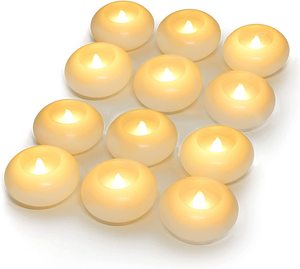
Floating candles represent a refined niche within Ireland’s decor ecosystem. From historic castle wedding venues along the Wild Atlantic Way to high-end spa resorts and national retail chains like Dunnes Stores, Musgrave Group, and boutique home fragrance outlets, the demand for high-burn-time, drip-less, hydrophobic floating candles is expanding rapidly. Our state-of-the-art facility processes up to 27 metric tonnes of wax daily, blending advanced European automation with meticulous hand-finishing to deliver OEM and ODM floating candle solutions tailored to Irish market specifications.
Hydrodynamic Surface Tension & Buoyancy Hydrodynamics
Unlike standard pillar or votive candles, floating candles require strict hydro-engineering principles. A floating candle must maintain dynamic buoyancy balance while burning down, resisting tilt, water ingress, and flame quenching caused by ambient liquid displacement.
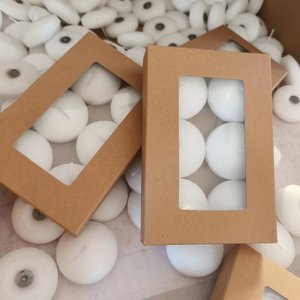
- Concave Bottom Hydrodynamics: Our molded floating candles feature an inverted dome base. This architectural silhouette traps a micro-pocket of air beneath the candle body while lowering the center of gravity, ensuring 100% stability even in outdoor water features subject to wind ripples.
- Density-Optimized Wax Blends: Utilizing refined paraffin (58-60°C melting point), hydrogenated soy wax, and palm-free vegetable blends, we maintain a precise specific gravity of 0.89 to 0.92 g/cm³. This ensures the optimal buoyancy depth (submerging 40-50% of the body), keeping the wick assembly elevated safely above the water line.
- Capillary Wick Water Repellency: Wicks are treated with hydrophobic barrier coatings prior to insertion. This prevents ambient moisture absorption in damp storage or high-humidity outdoor environments typical of Ireland's maritime climate.
EU Compliance Matrix: Meeting Irish Safety & Environmental Regulations
Exporting to the Republic of Ireland demands total adherence to European Union consumer safety laws. Our production lines operate under strict quality management systems (ISO 9001:2015) and social accountability auditing (SA 8000), delivering full documentation packages for seamless customs clearance at Dublin Port or Port of Cork.
| EU Directives & Standard | Technical Requirement | Our OEM/ODM Manufacturing Guarantee |
|---|---|---|
| EN 15493 (Fire Safety) | Maximum flame height, self-extinguishing behavior at burn end, zero re-ignition. | 100% batch-tested. Flame height restricted to <75mm; thermal core engineered to auto-extinguish prior to shell collapse. |
| EN 15426 (Sooting Behavior) | Average soot index <1.0 per hour to protect indoor air quality. | High-purity braided cotton/paper wicks ensure soot index rating below 0.15, protecting historic Irish indoor ceilings. |
| REACH (EC 1907/2006) | Absence of SVHCs (Substances of Very High Concern), heavy metals, or banned phthalates. | All raw paraffin, soy waxes, dyes, and fragrance oils carry full SDS and REACH registration compliance documentation. |
| CLP Regulation (EC 1272/2008) | Standardized classification, labeling, and packaging for scented candle variants. | In-house graphic team designs compliant CLP safety labels, tactile danger warnings, and UFI code integration for Irish retailers. |
| EN 16738 (Air Emissions) | Limits on volatile organic compounds (VOCs), formaldehyde, and benzene during combustion. | Certified lab-tested fragrance loads (up to 10%) producing zero harmful indoor air emission spikes. |