Precision-molded, thermal shock certified empty candle containers optimized for cold-climate scent throw, lead-free stability, and automated high-speed wax pouring.
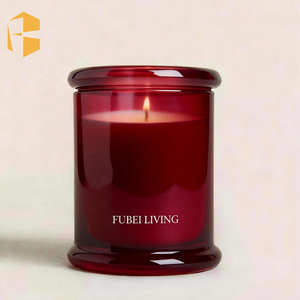
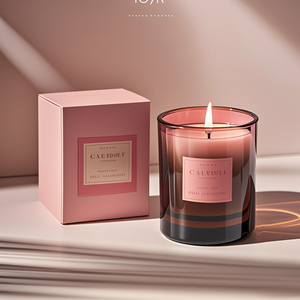
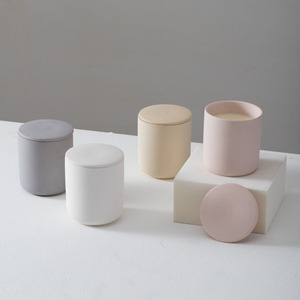
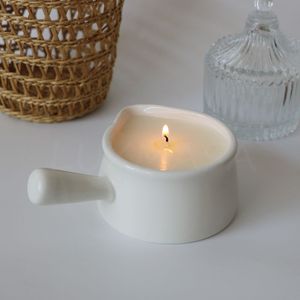
As one of North America's most historical, affluent, and design-conscious metro areas, Greater Boston represents a unique market for luxury home scenting and commercial candle brands. From boutique storefronts along Charles Street in Beacon Hill and Newbury Street in Back Bay to high-end hospitality venues across the Seaport District, demand for premium candle vessels has evolved beyond basic utility. Today, Boston candle pourers, home decor brands, and private label retailers demand architectural integrity, thermal resilience, and verified eco-compliance.
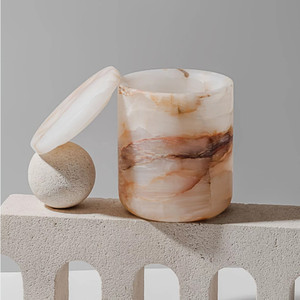
New England's distinct four-season climate plays a crucial role in candle performance. Winters in Massachusetts bring substantial indoor temperature drops and drier ambient humidity. Standard thin-walled glass containers often suffer from uneven wax pooling, tunneling, or thermal shock fractures when ignited in cold rooms. Sourcing candle vessels engineered specifically for high thermal inertia—such as heavy-base borosilicate glass, solid onyx marble, or thick-walled stoneware ceramic—ensures uniform heat distribution, maximized scent throw, and flawless melt pools even during harsh cold snaps.
Boston consumers prioritize eco-conscious luxury, non-toxic living, and clean-label aesthetics. According to local retail procurement trends, over 68% of candle buyers in Massachusetts actively seek candles housed in reusable, upcyclable vessels. Our manufacturing facility specializes in engineering post-burn multi-purpose containers—such as marble salt cellars, ceramic coffee mugs, and luxury storage canisters with silicone-sealed wooden lids—allowing Boston brands to deliver superior information gain and sustainability storytelling to their end customers.
Commercial candle pouring requires precision manufacturing metrics to guarantee safety, scent dispersal, and brand consistency. When supplying candle vessels to Boston brands and contract filling plants across the East Coast, our engineering team enforces strict laboratory protocol matching American Society for Testing and Materials (ASTM) standards.
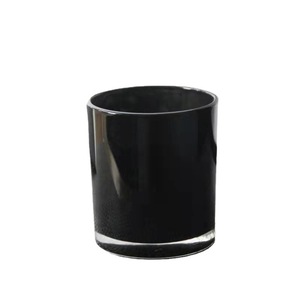
Glass candle containers must conform to ASTM F2179 (Standard Specification for Annealed Soda-Lime-Silicate Glass Containers Intended for Use in Candles). Un-annealed glass retains internal physical stress, rendering it susceptible to sudden shattering when hot wax reaches the bottom quarter of the jar. Our glass production lines utilize controlled annealing lehrs that gradually cool the vessels over 90 minutes, eliminating micro-strains in the atomic structure.
| Vessel Material Type | Thermal Expansion Coeff. (COE) | Max Thermal Shock ΔT | Ideal Wax Type Compatibility | Boston Market Application |
|---|---|---|---|---|
| Heavy Base Soda-Lime Glass | 8.5 – 9.2 × 10⁻⁶ /°C | 50°C (ASTM F2179 Pass) | Soy, Coconut, Beeswax Blends | Everyday Retail & Mass Market |
| High-Borosilicate 3.3 Glass | 3.3 × 10⁻⁶ /°C | 160°C (Extreme Resistance) | High Essential-Oil Content Soy | Aromatherapy & Spa Collections |
| Natural Onyx & Marble Stone | 5.0 – 7.0 × 10⁻⁶ /°C | 100°C (High Insulation) | Dense Soy Wax, Paraffin Blends | Ultra-Luxury Flagship Products |
| High-Fired Stoneware Ceramic | 4.5 – 6.0 × 10⁻⁶ /°C | 120°C (Non-Porous Glaze) | Natural Plant Waxes & Wooden Wicks | Artisanal & Eco-Luxury Boutiques |
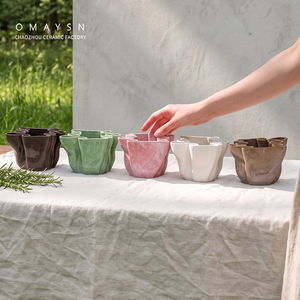
Ceramic and earthenware candle vessels must maintain complete chemical inertness against concentrated fragrance oils. Un-glazed or low-fired ceramics absorb liquid fragrance components over time, leading to oil weeping on outer walls, altered burn profiles, and potential flammability risks. Our ceramic candle jars undergo high-temperature firing at 1,280°C with non-toxic, lead-free food-grade glazes. This creates a non-porous vitreous barrier that prevents oil migration and guarantees 100% scent retention within the wax matrix.
For commercial candle fillers in New England operating automated multi-head wax nozzles, dimensional tolerances are critical. A variation of just 0.5mm in vessel rim diameter can interrupt automatic capping systems or cause uneven wick placement. We manufacture every batch with a tight dimensional tolerance of ±0.15mm, featuring perfectly flat rims to ensure seamless vacuum-lid sealing and flawless automated line performance.
Since 1999, our ISO 9001:2015 and SA 8000 certified manufacturing infrastructure has served over 500 global B2B clients, luxury brands, and high-volume contract candle fillers. When procuring custom candle vessels for Boston, Cambridge, Somerville, and regional New England distribution networks, our facility delivers unparalleled supply chain security and engineering expertise.
We transform 3D CAD models into physical samples within 7 to 12 days. Whether you require a unique embossed logo, custom pantone electroplating, or proprietary geometric vessel shapes, our rapid mold-making division reduces time-to-market by up to 60%.
Every production lot undergoes 100% visual inspection, thermal shock testing, drop-impact analysis, and rim flatness calibration before export packing. We provide full Material Safety Data Sheets (MSDS), REACH compliance declarations, and ASTM certification paperwork with every shipment.
Shipping fragile glass and heavy stone vessels across oceans demands ocean-ready export packaging. Our vessels are packed in heavy-duty 5-ply corrugated outer master cartons, reinforced with corner protectors, individual honey-comb dividers, and ocean-freight wooden pallets wrapped in humidity-resistant shrink film. We offer flexible trade terms including FOB, CIF, and full DDP (Delivered Duty Paid) direct to Boston warehouses and commercial filling plants, handling customs clearance, harbor maintenance fees, and inland trucking seamlessly.
Essential information for Boston candle brand owners, procurement managers, and private label creators.
Our standard production MOQs are structured by material type: 1,000 pieces per SKU for glass candle jars in custom colors or electroplated finishes; 500 pieces for natural onyx marble vessels; and 1,000 pieces for custom stoneware ceramic vessels. For newly established Boston candle brands or pilot product testing, flexible trial runs can be arranged upon technical review.
We utilize drop-tested, high-density export packaging featuring custom-fit EPE foam caps, heavy-wall cell dividers, and reinforced heat-treated ISPM-15 compliant pallets. Our breakage rate on ocean freight to Conley Terminal in Boston averages under 0.15%, well below the industry standard of 2%. In the rare event of transit damage, replacement vessels are dispatched immediately under our transit guarantee.
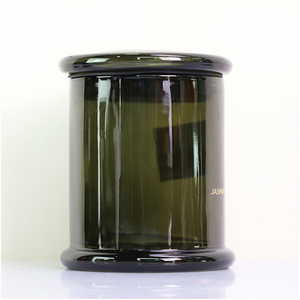
Yes. Our decoration facility offers exact Pantone matching for matte, glossy, translucent, or opaque sprayed finishes. Additional finishing capabilities include metallic electroplating, gradient color spraying, hot-foil stamping, silk-screened logos, high-relief debossing, laser engraving, and custom wood or metal lid pairings with food-grade silicone seals.
Absolutely. We formulate our vessel inner surface treatments to optimize wax adhesion and prevent frosting or wet spots common with natural soy and coconut wax blends. Our straight-sided and heavy-base designs feature flat inner bases designed to securely seat standard metal wick clips and wooden wick sustainers without tilting.
Sample production takes 7 to 12 days. Once pre-production samples are approved, mass manufacturing typically requires 21 to 30 days. Ocean freight transit to Port of Boston (Conley Terminal) takes approximately 22 to 32 days, resulting in a total door-to-door timeline of 6 to 8 weeks for standard customized orders.
Request physical samples, technical drawings, or a comprehensive FOB/DDP quotation today. Our engineering consultants are ready to assist you with vessel material selection, thermal testing data, and custom branding options.