Explore our premium finished candle lines manufactured with rigorously matched wick-and-wax formulations for optimal cold and hot fragrance throw.
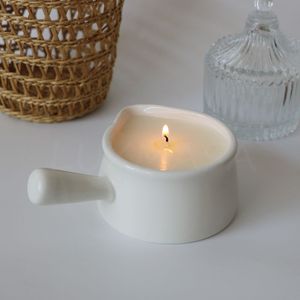
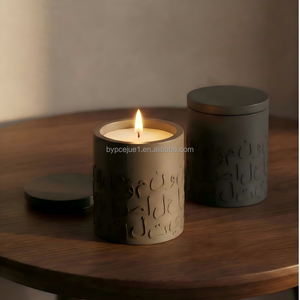



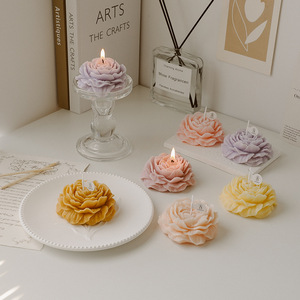


In the luxury home fragrance and commercial candle sector, the candle wick is not merely an accessory; it is the fundamental mechanical engine of the combustion system. As leading candle wicks manufacturers and specialized OEM/ODM production factories operating from our ISO 9001:2015 and SA 8000 certified facilities in Bidadi Industrial Area, India, Welburn Candles integrates fluid mechanics, physical chemistry, and advanced fiber braiding to optimize burn dynamics for global retail brands.
A candle wick operates via capillary action, drawing liquid fuel (molten wax) upward from the melt pool into the combustion zone where it vaporizes and reacts with atmospheric oxygen. Achieving an ideal burn profile—characterized by a stable flame height, controlled soot output, minimal mushrooming, and zero tunneling—requires an exact quantitative match between the wick substrate, braid density, chemical salt impregnation, and the specific wax matrix viscosity.
Technical Information Gain Insight: The transition toward complex plant-based waxes (such as high-tallow soy blends, hydrogenated coconut oil, and beeswax) has rendered traditional legacy wicks obsolete. Natural waxes feature higher molecular weights, complex fatty acid structures, and varied viscosity curves that require specialized tension-braided, chemically treated wicks to prevent premature flame drowning.
Modern candle wick manufacturing relies on precise textile braiding machines that alter fiber count, pick density, tension differential, and core composition. Below is an engineering breakdown of primary wick categories deployed across commercial candle manufacturing lines:
Constructed from 100% long-staple ring-spun cotton yarns. Designed to curl slightly during combustion, bringing the tip into the hottest outer region of the flame for self-trimming performance. Ideal for standard paraffin and soft vegetable waxes.
Engineered with a robust, rounded structural profile that resists clogging from heavy viscosity liquids. Preferred for pillar candles, beeswax formulations, high-pigment decorative candles, and severe dipping applications.
Incorporate a inner structural core—such as unbleached paper filaments or cellulose fibers—surrounded by braided cotton. Provides vertical rigidity during deep container pouring and ensures stable capillary draw in multi-wick containers.
Raw cotton fiber cannot be introduced directly into wax without chemical conditioning. Industrial wick manufacturing requires an aqueous chemical bath treatment followed by precision drying. Chemical impregnation controls oxidation, reduces post-extinction smoldering (afterglow), and prevents heavy carbon accumulation (known as "mushrooming").
To assist commercial procurement officers and brand chemical engineers, our R&D lab has formulated the following reference matrix mapping wick architecture to specific wax substrates:
| Wax Substrate Type | Melt Viscosity | Recommended Wick Architecture | Capillary Rate (mm/min) | Key Performance Objective |
|---|---|---|---|---|
| 100% Pure Soy Wax | High (45-55 cSt) | Paper-Threaded Flat Cotton (ECO / HTP Series) | 3.8 - 4.2 | Prevents flame drowning, melts edge-to-edge pool |
| Coconut-Soy Blend | Medium-Low (25-35 cSt) | Flat Braided Ring-Spun Cotton (LX Series) | 4.5 - 5.0 | Controls thermal runaway and flame flickering |
| Refined Paraffin Wax | Low (15-20 cSt) | Standard Flat Braided / Cored Cotton | 5.2 - 6.0 | Maximizes fragrance throw, clean self-trimming |
| Beeswax (Filtered/Natural) | Very High (>60 cSt) | Square Braided Heavy Duty Cotton | 3.0 - 3.5 | Prevents soot accumulation from dense wax molecules |
| FSC Sustainable Wood | N/A (Rigid Strip) | Single/Double-Ply Softwood & Hardwood | 2.5 - 3.2 | Delivers crackling acoustic effect & wide melt pool |
As global regulatory standards tighten and consumer expectations shift toward transparency and environmental accountability, procurement executives must adapt their sourcing strategies. The candle wick and manufacturing industry is undergoing structural transitions driven by four major macro-trends:
With the implementation of the European Union Deforestation Regulation (EUDR), retail brands are requiring 100% supply chain traceability for cotton, hemp, and wood wicks. Organic, GOTS-certified unbleached cotton and FSC-certified wood wicks are replacing standard commercial textiles.
Consumer demand for intense scent throw has pushed fragrance oil loads from historic 5% levels up to 10%–12%. This high concentration of synthetic and natural aromatics causes wick clogging. Advanced dual-stage braided wicks with porous capillary channels are engineered specifically to maintain flame stability under high fragrance loads.
Wooden wicks engineered with acoustic resonance (delivering controlled micro-crackling sound profiles) are experiencing compound annual growth rates over 14%. Manufacturers are developing precision-slotted wood wicks that guarantee reliable ignition and crackle without elevated soot generation.
Sourcing managers who partner with verified, automated candle wick factories can lock in pre-tested wick-and-wax combinations, minimizing trial-and-error lead times during product development cycles.
Since 1999, Welburn Candles Private Limited has established itself as an institutional supplier and private-label contract manufacturer serving premier retail groups, hotel chains, and direct-to-consumer brands across North America, Europe, Australia, and the Middle East.
Our Bidadi manufacturing hub operates under audited ISO 9001:2015 Quality Management Systems and SA 8000 Social Accountability certifications. We supply full SDS documentation, CLP/GHS labels, REACH declarations, and ASTM F2417 safety reports.
Equipped with automated wax blending tanks, precision wick crimping and sustained-wick insertion machinery, our facility processes over 27 tonnes of wax per day—outputting up to 1 million tealights, 20,000 jar candles, and 200,000 utility candles daily.
We manage complete export documentation, container stuffing, sea-freight routing via Chennai and Bangalore ICD ports, handling FOB, CIF, and DDP terms directly into Amazon FBA warehouses or regional distribution hubs worldwide.
Our minimum order quantities (MOQs) depend on the format. Scented container candles start at 1,000 units per SKU, mass-produced tealights require 20,000 units, and pillar/household candles start at 500 kg of processed wax. Pilot production runs for new brand launches can be evaluated upon request.
Mushrooming occurs when unburned carbon accumulates on the wick tip due to an over-sized wick or incomplete oxidation of heavy fragrance molecules. We perform ASTM F2417 burn testing in controlled draft-free chambers, adjusting chemical salt treatment (boric acid/ammonium phosphate) and braid density until soot levels fall well below international threshold limits.
Yes. We supply pre-cut, pre-waxed wicks fitted with high-quality tinplate sustainers (tabs) ranging from 14mm to 20mm in diameter, with neck heights from 3mm to 10mm to ensure safety shut-off. These are engineered for direct compatibility with high-speed automated candle filling equipment.
Custom wick-and-wax sampling takes 7 to 12 business days. Full bulk production runs 21 to 35 calendar days following artwork and fragrance sign-off. Ocean freight transit times range from 22 to 35 days to major US and EU ports from Bangalore ICD or Chennai port.
Absolutley. 100% of our candle wicks are guaranteed lead-free and zinc-free, manufactured exclusively using pure long-staple cotton, natural paper, or FSC wood. All fragrance formulations meet International Fragrance Association (IFRA) standards and REACH regulations.
Connect with our technical engineering team to request custom wick burn-testing, receive wholesale pricing sheets, or initiate a private label OEM production quote.
Get a Quote