Global Candle Market Whitepaper: Strategic Industry & Product Trends
The global commercial candle market has undergone a dramatic shift, evolving from simple utility lighting into a multi-billion dollar category driven by self-care, interior aesthetics, aromatherapy wellness, and corporate gifting. Sourcing directors and brand procurement leads must navigate shifting consumer expectations, strict international chemical compliance laws, and raw material volatility to maintain market share.
1. The Transition to Sustainable & Plant-Based Wax Formulations
Historically, refined paraffin wax dominated high-volume production due to its low melting point, high fragrance payload capability, and cost-efficiency. However, global buyers in Western Europe and North America are rapidly shifting specifications toward natural, renewable waxes. Pure soy wax, coconut wax blends, beeswax, and palm-free hydrogenated vegetable waxes now represent over 60% of modern private label requests.
- Soy-Coconut Blends: Offer superior glass adhesion, smooth top surface setting post-burn, and an extended burn time without soot generation.
- Beeswax Integration: Provides natural air-purifying properties, higher melting temperatures ideal for warm climates, and a luxurious natural golden hue.
- Regulatory EUDR Compliance: Sourcing managers must ensure palm derivatives comply with the European Union Deforestation Regulation (EUDR), making traceably sourced soy and coconut blends the preferred safe-haven material.
Strategic Insight for Sourcing Directors: Transitioning your product catalog to 100% plant-based waxes yields up to a 35% retail price premium while dramatically improving compliance scores with major retail buyers like Target, Walmart, and Sephora.
2. Sensory Innovation: Fragrance Throw Optimization & Clean Formulations
In modern semantic consumer searches, "hot throw" (scent diffusion during burning) and "cold throw" (fragrance intensity at shelf presentation) are top purchase criteria. Fragrance oil loads have elevated from industry standards of 3%–5% up to concentrated levels of 8%–12%.
Achieving high fragrance loading without causing flame sputtering, excessive soot, or structural wax sweating requires precise microcrystalline stabilizing agents and calibrated wick selection (such as ring-spun organic cotton wicks or natural crackling wooden wicks). Furthermore, global markets demand Phthalate-Free, Paraben-Free, and California Proposition 65 Compliant scent profiles.
3. Vessel Aesthetics & Multi-Functional Packaging Designs
Consumers view container candles as permanent home decor accessories. As a result, vessel manufacturing trends emphasize upcyclability and distinctive tactile finishes:
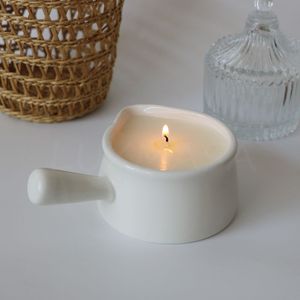
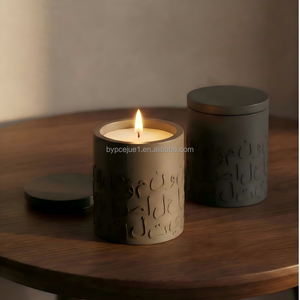
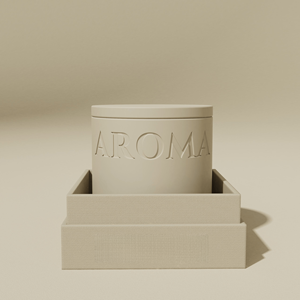
- Artisanal Ceramics & Stoneware: Matte glazed, reactive glazes, and raw textured terracotta vessels that function as planters or keepsakes after the candle burns out.
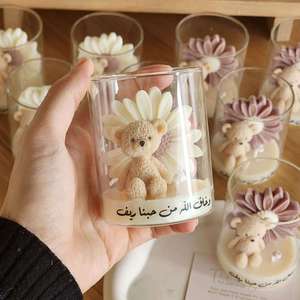
- Electroplated & Embossed Glass: Deep relief patterns (such as Islamic geometric art for Eid/Ramadan lines) paired with wooden or metal metallic lids.
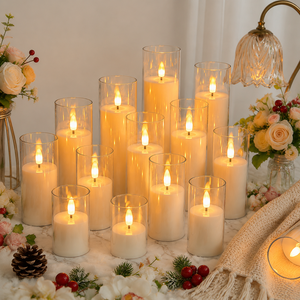
- Flameless & Hybrid LED Technology: Combining real paraffin outer shells with 3D flickering electronic LED flame cores for venues with strict fire codes (hotels, cruise ships, event halls).