In the global commercial home fragrance market, the physical container is not merely a decorative shell; it is an active mechanical and thermal component of the entire burning system. As a certified ISO 9001:2015 and SA 8000 custom OEM candle container factory, we manufacture precision-engineered glass, ceramic, and metal vessels designed to endure rigorous thermal shock, protect molten wax pools, maintain structural integrity under continuous thermal load, and elevate brand equity.
Procurement directors and luxury home scent brand developers face complex operational challenges: preventing container thermal stress fractures, ensuring precise inner-diameter tolerances for automated wax pouring lines, meeting stringent international safety standards (ASTM F2417 flame stability, REACH, and European CLP packaging regulations), and maintaining zero-defect batch consistency across multi-ton ocean freight dispatches. This engineering whitepaper outlines critical procurement criteria, future packaging trends, manufacturing benchmarks, and our specialized B2B export capabilities.
Explore our primary OEM export product lines, engineered specifically for high-speed automated hot-wax filling lines and custom luxury brand presentations.
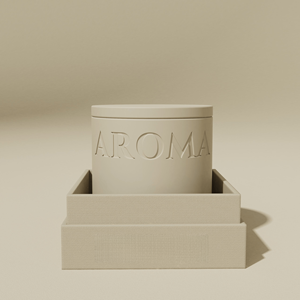
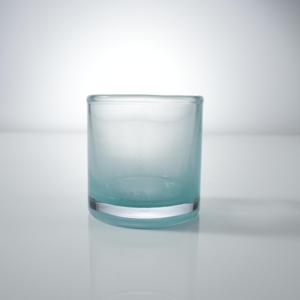
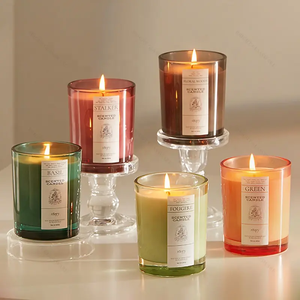
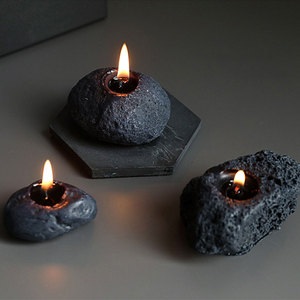
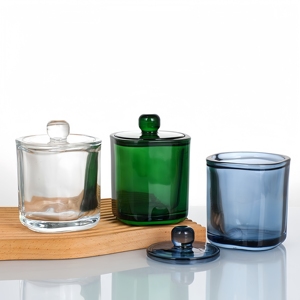
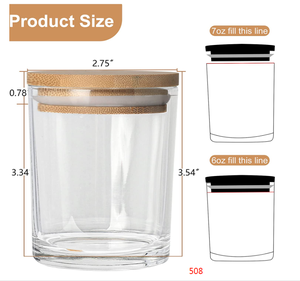
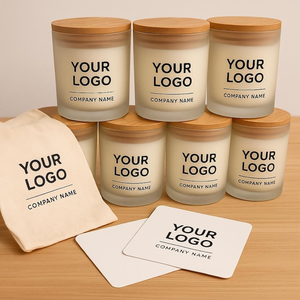
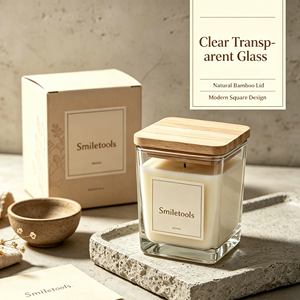
As a established manufacturing enterprise operating across expansive production facilities, we integrate high-speed automated machine-blowing, precision press-molding, hand-crafted mouth-blown techniques, and advanced surface finishing lines under one audited system. Operating under strict ISO 9001:2015 quality controls and SA 8000 social compliance benchmarks, we ensure every production run meets international B2B retail requirements.
Every glass jar passes through a computer-controlled continuous annealing lehr (stress-relief furnace) over 4.5 hours, maintaining thermal shock thresholds above 90°C ($\Delta T \ge 90^\circ\text{C}$). This eliminates internal residual stress and prevents catastrophic cracking during hot wax filling ($80^\circ\text{C}-95^\circ\text{C}$) and subsequent burn cycles.
Automated filling machinery requires uniform neck openings. Our vessel rims are processed with automatic laser rim-cutting or diamond-wheel edge grinding, guaranteeing mouth diameter tolerances within ±0.5mm and wall thickness variances within ±0.3mm.
We utilize food-grade, VOC-free organic water-based lacquers for internal spray coatings, external matte/frosted finishes, high-vacuum electroplating, and ceramic decal baking (firing up to 600°C) ensuring zero toxic off-gassing during candle combustion.
Selecting the correct container substrate is essential to balancing thermal performance, brand aesthetic, and target landed cost. Below is an engineering comparison matrix for B2B buyers:
| Substrate Material | Thermal Shock Resistance ($\Delta T$) | Wall Thickness Uniformity | Optimal Fragrance Load Compatibility | Primary Industrial Applications |
|---|---|---|---|---|
| Soda-Lime Machine Glass | ≥ 75°C - 90°C | ± 0.4 mm | 8% - 12% Essential/Synthetic Oils | Mass Retail, Supermarkets, FMCG Lines |
| Mouth-Blown Super Thin Glass | ≥ 95°C - 110°C | ± 0.2 mm | 10% - 15% High-Concentration Oils | Luxury Niche Brands, High-End Boutiques |
| High-Density Ceramic / Stoneware | ≥ 120°C | ± 0.8 mm | 6% - 12% Soy & Beeswax Blends | Artisanal Brands, Spa & Wellness Facilities |
| Seamless Electroplated Aluminum/Tin | ≥ 150°C | ± 0.05 mm | 6% - 10% Standard Fragrance Oils | Travel Candles, Gift Sets, Promotional SKUs |
As regulatory environments tighten in Europe and North America and consumer demand shifts toward circular design, the candle container manufacturing industry is experiencing significant structural evolution. B2B buyers and brand managers must align their procurement strategies with four key macro-trends:
European sustainability directives (such as the EU Packaging and Packaging Waste Regulation - PPWR) are accelerating the demand for vessels made with high ratios (30% to 70%) of post-consumer recycled glass cullet. Utilizing recycled cullet lowers furnace melting temperatures, reducing carbon emissions per vessel by up to 25%. Simultaneously, low-energy ceramic formulations fired at optimized sintering temperatures are replacing traditional high-carbon stoneware.
Modern luxury consumers demand secondary utility from premium candle containers. Leading brands are commissioning custom vessels designed explicitly for post-combustion reuse—such as food-safe beverage tumblers, storage canisters, or planters. This requires factory-side implementation of food-safe internal glazes, easily removable wax residues, and airtight wooden, bamboo, or silicone-sealed glass lids.
As candle pouring operations automate to reduce labor costs, container geometries must adapt. Traditional tapered or irregular vessels present challenges for automated conveyor belts, wick-centering machines, and multi-head volumetric wax dispensers. The market is shifting toward "Squircle" (square-circle hybrid), rigid cylindrical, and heavy-bottomed straight-sided containers that provide both aesthetic differentiation and operational stability on high-speed filling lines.
Surfacing treatments like electroplating, frosted acid etching, and internal lacquering are subject to intense regulatory scrutiny. Regulatory bodies actively test finished candle jars for heavy metal leaching (Lead, Cadmium) and volatile organic compound emission when exposed to continuous heat ($60^\circ\text{C}-80^\circ\text{C}$). Advanced OEM factories must provide third-party REACH, RoHS, and California Proposition 65 test certifications for all paints, foils, and glazes applied to the vessel.
Our MOQs are structured by production technique: standard clear or frosted glass jars in stock molds start at 1,000 to 3,000 units. Custom sprayed colors, electroplating, or custom screen-printed glass vessels require 3,000 to 5,000 units per SKU. Fully customized tooling molds (for unique glass or ceramic shapes) require an MOQ of 10,000 units, with pilot sample runs available during the mold development stage.
Thermal shock resistance is governed by chemical composition, wall uniformity, and annealing duration. Our factory subjects 100% of glass batches to automated continuous annealing lehrs to eliminate structural tension. We conduct random thermal shock testing by submerging heated jars ($95^\circ\text{C}$) into cold water ($20^\circ\text{C}$) to guarantee a temperature differential threshold ($\Delta T$) of at least 75°C to 90°C without breakage.
Yes. We provide complete closure system engineering. We produce natural bamboo, FSC-certified beech wood, electroplated tinplate, aluminum, and pressed glass lids equipped with food-grade silicone airtight ring gaskets. Gasket elasticity and rim tolerances are calibrated to prevent fragrance oil evaporation while ensuring smooth manual opening and closing.
3D CAD drawing design and physical sampling take 7 to 10 working days. Custom metal mold development requires 15 to 20 days. Once pre-production samples are approved by your quality team, mass production typically takes 25 to 35 days. Sea freight dispatch from our nearby port facilities to European or North American ports takes approximately 22 to 35 days depending on destination.
We engineer export packaging specifically for fragile vessel protection. Containers are packed using high-density molded ISTA-compliant EPE foam inserts, corrugated dividers, or customized master cartons designed to pass 1.2-meter drop tests (ISTA 1A/3A standards). We also supply retail-ready gift boxes, sleeve packaging, barcoding, and FBA fulfillment labelling prior to container loading.
With over two decades of dedicated glass, ceramic, and candle manufacturing heritage, our enterprise combines raw material expertise with refined global export capabilities. Our facilities operate with a daily wax processing capacity of 27 tonnes, producing up to 20,000 scented jar candles, 1,000,000 tealight vessels, and 200,000 utility candles daily for clients across 20+ countries.
Internal and external spray painting, hot-stamping foil, silk-screen printing, frosted etching, laser engraving, and custom electroplating line under 100% factory ownership.
In-line automated optoelectronic glass inspection machines detect wall bubbles, micro-cracks, and dimensional deviations prior to secondary decoration and packing.
Dedicated B2B account managers handle all export paperwork, custom declaration, MSDS, CLP/GHS labels, REACH declarations, and FOB, CIF, or DDP ocean transit execution.
Connect directly with our engineering team to review 3D CAD files, request pre-production glass samples, or receive a comprehensive landed-cost quotation for your next manufacturing run.
Inquire Now