Engineered for global luxury brands, high-volume retail chains, and specialized home fragrance enterprises.
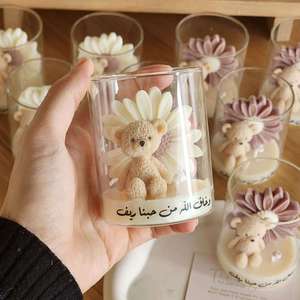
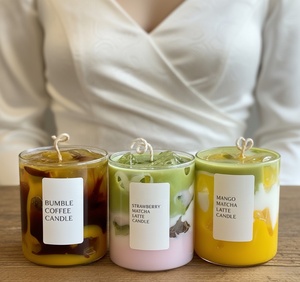
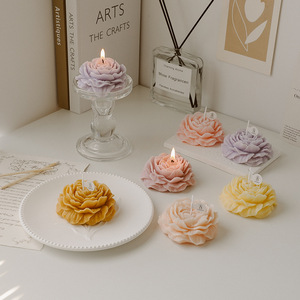
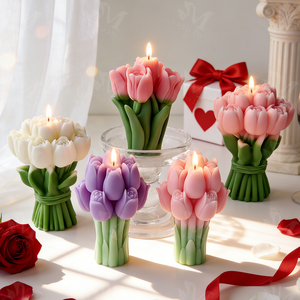
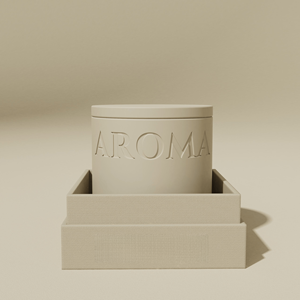
Contract pouring for consumer home fragrance products is fundamentally an exercise in precise thermal management, lipid chemistry, and physical mechanics. As global demand shifts toward sustainable, non-petroleum waxes—such as soy, coconut, palm-free vegetable, and beeswax blends—contract manufacturers must evolve beyond simple molten-phase filling. Managing crystal formation, polymorphic phase transitions, liquid contraction ratios, and volatile fragrance flashpoints requires sophisticated thermal conditioning infrastructure.
When selecting a China top contract pouring supplier, procurement teams look beyond basic assembly capacity to analyze technical capabilities: multi-stage heating loops, automated volumetric dosing accuracy within ±0.5 grams, and controlled cooling tunnels. Fluctuations in ambient factory humidity or micro-variations of 2°C during liquid wax dosing can lead to structural defects like surface frosting, sinkholes, wick leaning, or phase separation (sweating) of fragrance oils.
Technical Insight: Polymorphism in hydrogenated soybean oil requires multi-stage temperature profiles during pouring. Pre-heating glass or ceramic vessels to 45°C–50°C before liquid dispensing prevents thermal shock and guarantees uniform sidewall adhesion, eliminating wet spots across high-volume production runs.
Our contract pouring operations incorporate German-designed automated filling headers paired with micro-stepping inline pumps. By integrating linear cooling systems with calibrated airflow dynamics, we achieve structural density across high-volume jar candles, molded pillar candles, decorative botanical shapes, and high-efficiency tealights.
Closed-loop oil-jacketed melting tanks prevent fragrance degradation and guarantee uniform temperature within ±0.5°C across 27 tonnes of daily throughput.
Precision fragrance loading up to 12% active oil concentrate with zero phase separation, optimized for high hot and cold scent throw performance.
In-house burn-chamber validation for flame height, smoke density, container heat transfer, self-extinguishing safety, and soot emissions.
Selecting the optimal combination of wax substrates, wick constructions, and container materials is critical to achieving stable combustion dynamics and regulatory compliance (including CLP/GHS and REACH directives).
| Wax Base Type | Pouring Temp Range | Fragrance Load Max | Recommended Wick Type | Primary Application Areas |
|---|---|---|---|---|
| 100% Pure Soy Wax | 52°C - 58°C | 8% - 10% | Flat Braided Cotton / Paper Core | Aromatherapy, Eco-Luxury Jar Candles |
| Coconut-Soy Hybrid | 60°C - 65°C | 10% - 12% | Coreless Ring-Spun Cotton | High-End Fragrance Vessels, Massage Candles |
| Refined Paraffin Wax | 75°C - 85°C | 6% - 8% | Cored Zinc/Tin or Lead-Free Cotton | Mass Market Votives, High-Volume Tealights |
| Beeswax & Plant Blends | 68°C - 74°C | 5% - 7% | Square-Braided Raw Cotton | Air-Purifying Pillars, Tapers, Luxury Molded |
| High-Clarity Jelly Wax | 95°C - 105°C | 3% - 5% | High-Temp Polymer Braided Wick | Transparent Decorative Gel & Botanical Displays |
The global home fragrance landscape is undergoing rapid restructuring driven by evolving regulatory demands, environmental standards, and shifting consumer purchasing habits. For enterprise sourcing executives, selecting a contract pouring supplier in China requires aligning with these macro-trends:
With the implementation of the European Union Deforestation Regulation (EUDR), bulk purchasers are replacing unverified palm waxes with certified RSPO palm-free vegetable blends, organic soy, and upcycled regional agricultural by-products. Production facilities must maintain strict chain-of-custody documentation and raw material traceability.
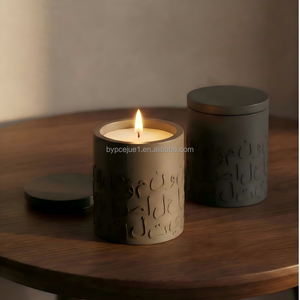
Modern luxury brands are moving beyond standard glass jars toward hand-carved natural stone, matte-glazed ceramics, spun metals, and concrete vessels. Contract pouring operations must deploy specialized vessel conditioning lines, custom thermal profiling, and flexible sealing gaskets to manage varying absorption rates and heat conductivity.
Consumer preferences for non-toxic indoor air quality have increased demand for phthalate-free, paraben-free, and IFRA 50th Amendment-compliant essential oil formulations. Modern pouring facilities utilize low-temperature secondary injection loops to add delicate aroma compounds immediately prior to container filling, protecting heat-sensitive top notes from thermal degradation.
Labor cost pressures make integrated assembly lines essential. Contract pouring leaders now provide seamless downstream integration: automated wick centering, laser surface smoothing, automated batch barcoding, rigid box assembly, shrink wrapping, and Amazon FBA-compliant master carton pack-out under a single roof.
Operating out of advanced industrial facilities certified under ISO 9001:2015 for Quality Management Systems and SA 8000 for Social Accountability, we provide institutional stability and transparent supply-chain governance to global importers and retail chains.
Our facility combines automated high-speed German liquid filling lines with specialized hand-finishing cells. This hybrid operational structure allows us to handle high-volume runs—such as 1,000,000 unit daily tealight batches—alongside intricate, artisanal projects like hand-carved floral candles, embossed religious votives, and custom-sculpted wax art.
Supply Chain Surety: We maintain reserves of key raw materials—including refined soy lipid stocks, high-purity cotton wicking, and standard glass containers—to hedge against global material shortages and ensure stable lead times through peak production seasons.
Every contract pouring project is overseen by a dedicated project manager who directs the initial technical feasibility review, sample iteration, mass production scheduling, third-party lab inspection coordination, and ocean freight logistics (FOB, CIF, or DDP terms).
MOQs depend on the product format: mass-production tealights start at 20,000 units; custom scented jar candles require 1,000 units per SKU; specialized pillar or household candles start at a minimum wax charge of 500 kg. Pilot production runs for market testing can be evaluated upon technical review.
We use dual-pour automated lines combined with temperature-controlled cooling tunnels. The initial pour establishes structural stability, while a precisely timed secondary pour levels the top surface. Controlled ambient cooling prevents rapid lipid crystallization, eliminating surface frosting.
Yes. We accept client-supplied fragrances and custom containers. Client-supplied materials undergo safety and compatibility testing—including flashpoint analysis, vessel thermal shock testing, and wick sizing verification—prior to full-scale manufacturing.
Every shipment comes with Safety Data Sheets (SDS), CLP/GHS-compliant product labeling files, IFRA Certificate of Conformity declarations, REACH compliance statements, and ASTM F2417 burn test reports from accredited third-party laboratories.
Prototyping and custom fragrance/wick sampling take 7 to 12 business days. Mass contract pouring and custom packaging assembly require 21 to 35 days following sample sign-off. Ocean transit adds 20 to 35 days depending on destination port logistics.
We engineer custom lipid blend ratios, adjusting melting points between 52°C and 68°C based on destination climate profiles. We also offer temperature-monitored insulation liners inside ocean containers to protect goods during transit through tropical maritime routes.
Partner with China's leading contract candle pouring manufacturer. Connect with our engineering team today for technical consultation, material sampling, and custom price quotations.