Custom-formulated, CE-compliant, and optimized for global export. Click below to launch direct procurement inquiries with our technical engineering team.
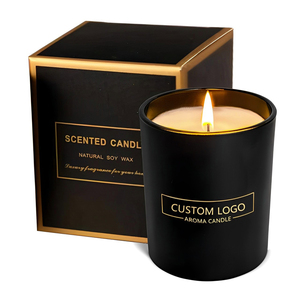
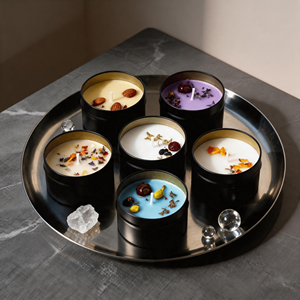
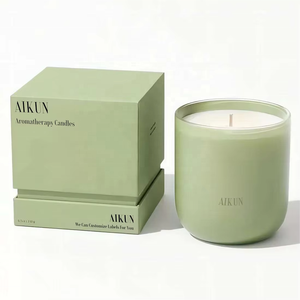
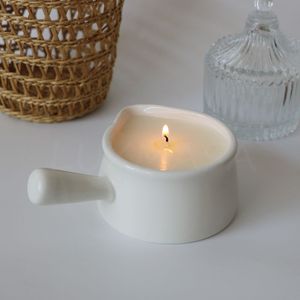
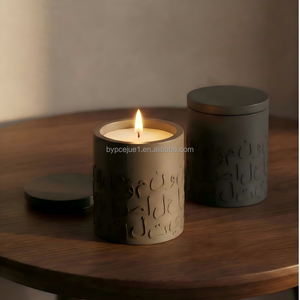
The global home fragrance and wellness industry has undergone a radical paradigm shift. Modern consumers no longer view candles merely as decorative novelties or emergency lighting; they are now positioned as active instruments of self-care, holistic wellness, and olfactory therapy. However, as the wellness candle sector expands into pharmaceutical, spa, and high-end retail distribution channels, regulatory scrutiny across major import regions—particularly the European Union, the United Kingdom, and North America—has intensified exponentially.
Securing authentic CE Certification and European Norm (EN) Standard Compliance is the definitive baseline for high-volume B2B candle procurement. In the European Economic Area (EEA), while standard non-electric candles fall primarily under General Product Safety Regulations (GPSR) alongside specific EN standards (such as EN 15493 for fire safety, EN 15494 for product safety labels, and EN 15426 for soot behavior), wellness candles incorporating multi-sensory components, electronic LED bases, or therapeutic health claims trigger rigorous compliance validation, including CE marking frameworks, CLP (Classification, Labelling and Packaging) standards, and REACH chemical safety registration.
As a premier contract manufacturer operating out of our state-of-the-art facility in the Bidadi Industrial Area (Karnataka, India) since 1999, our enterprise bridges the gap between artisanal olfactory craft and industrial compliance engineering. Operating with an audited production footprint of over 27 metric tonnes of daily wax processing capacity, we engineer high-performance wellness candles that surpass international burn metrics, zero-soot requirements, and fragrance distribution standards.
Scale without technical precision leads to compliance risk. Our industrial complex operates under strict ISO 9001:2015 quality management systems and SA 8000 social accountability protocols, guaranteeing that every mass-produced jar, pillar, or tealight candle adheres to the exact formulation specification defined during the prototyping phase.
Integrated German automated filling and cooling tunnels maintain temperature-controlled wax dosing within a ±0.5g tolerance. This prevents sinkholes, surface frosting, and internal cavitation across hydrogenated soy and coconut wax blends.
In-house fragrance laboratory validates essential oil volatile retention, cold throw intensity, and hot throw dispersion profiles using IFRA-compliant standards, mitigating flashpoint degradation during thermal mixing.
100% batch validation against ASTM F2417 (Standard Specification for Fire Safety for Candles) and European EN 15493, monitoring flame heights, container thermal resistance, and self-extinguishing safety thresholds.
The global contract manufacturing landscape for wellness candles is moving rapidly beyond standard paraffin-based pouring. Procurement teams must navigate four pivotal technical developments when defining their private label product lines for upcoming seasons:
Traditional pure soy wax often suffers from lower scent throw performance and surface frosting. Next-generation wellness candle manufacturing utilizes engineered hydrogenated lipid matrices, combining soy wax with coconut wax, beeswax, and palm-free vegetable oils. This hybrid architecture raises the melting point (52°C–56°C), improves container adhesion, and increases fragrance loading capacity up to 10–12% without oil sweating or wick clogging.
Proper combustion requires exact pairing of vessel geometry with wick capillary action. Modern compliance mandates 100% lead-free, zinc-free wicks. Factories are now utilizing ring-spun organic cotton wicks intertwined with high-grade paper filaments or sustainably sourced FSC-certified wooden wicks. Wood wicks generate an acoustic crackle that enhances the sensory experience while maintaining strict EN 15426 soot index compliance.
Consumers demand authentic functional benefits—such as stress reduction, sleep enhancement, or focus elevation. Formulating with pure essential oils (e.g., Lavender Lavandula angustifolia, Eucalyptus Eucalyptus globulus) presents thermal degradation challenges. Advanced factories utilize carrier-oil stabilization to ensure volatile aromatics survive the high-temperature pouring stage, maintaining aromatic therapeutic efficacy throughout the candle's lifespan.
Eco-conscious packaging has transitioned from a niche preference to a mandatory procurement specification. Leading B2B buyers now mandate thick-walled re-usable glass vessels, matte-finished ceramic containers, lightweight tinplate aluminum jars, and plastic-free FSC rigid display boxes. Decorating techniques such as eco-friendly water-based spraying and inner-vessel laser etching are replacing non-recyclable plastic wraps.
As retail chains and DTC brand aggregators adjust to global economic shifts, sourcing directors are revising their contract manufacturing strategies. Understanding these macroeconomic trends is essential for constructing a resilient, scalable supply chain:
Over-reliance on traditional East Asian manufacturing hubs exposed global brands to severe freight volatility, tariff spikes, and supply chain bottlenecks. India—specifically established hubs like Karnataka—has emerged as the premier global manufacturing alternative. With extensive domestic agricultural infrastructure for vegetable waxes, deep artisanal glass manufacturing roots, direct access to deep-water shipping ports (Chennai and Bangalore ICD), and competitive labor economics, Indian suppliers provide enterprise buyers with unmatched cost stability and risk mitigation.
Effective regulation requires brands exporting into the EU to verify that raw material commodities—including soy and palm oil derivatives—do not originate from recently deforested land. Leading candle factories are establishing full supply chain transparency down to the farm plot level, providing buyers with verifiable EUDR-compliant documentation alongside batch SDS (Safety Data Sheets) and REACH certificates.
The traditional model requiring 50,000-unit commitments per single SKU creates excessive inventory burden for emerging wellness brands. Modern OEM/ODM suppliers now offer hybrid production models: supporting lower initial Minimum Order Quantities (e.g., 1,000 pieces per SKU for high-end glass jar candles) for market testing, backed by the industrial capacity to instantly ramp to 100,000+ units per month upon commercial validation.
Consult with our OEM technical team on wax blends, custom fragrances, container tooling, and compliance documentation.
Direct technical answers to critical questions evaluated by brand procurement officers and compliance managers.
Our MOQs are structured according to product format and vessel complexity: High-volume tealight production starts at 20,000 pieces; specialized luxury scented jar candles start at 1,000 pieces per SKU; and extruded pillar or household candles start at a minimum wax volume of 500 kg per batch. Pilot production runs for market testing can be evaluated upon request during technical feasibility reviews.
Standard non-electric candles are evaluated under European Norms EN 15493 (Fire Safety), EN 15494 (Product Safety Labels), and EN 15426 (Sooting Behavior), which satisfy EU General Product Safety Regulations (GPSR). If a candle product integrates electronic components (such as LED warmers or internal glow bases), it falls directly under the CE Marking directives, including the EMC Directive and Low Voltage Directive (LVD). Our manufacturing facilities furnish all required test reports, SDS documentation, and CLP/GHS label layouts for seamless import clearances.
Prototyping and custom fragrance matching take 7 to 12 working days. Upon final design sign-off and container approval, bulk manufacturing requires 21 to 35 calendar days. Ocean transit from major Indian ports (Chennai/Bangalore ICD) averages 22 to 35 days to North American and European ports. We provide full FOB, CIF, and DDP shipping management.
We utilize IFRA-compliant pure essential oils and high-grade fragrance compounds with high thermal stability. Fragrance oils are introduced into the liquid wax matrix within tight temperature bands using automated metering equipment. Every batch undergoes rigorous burn testing in controlled ambient test chambers to measure cold throw, hot throw distance, flame stability, and burn duration before final packaging.
Yes. Our in-house engineering and packaging department designs custom rigid boxes, metal tins, corrugated master cartons, and custom inner dividers. We offer full barcoding, FNSKU labeling, polybagging, drop-test verified packaging, and palletization services compliant with Amazon FBA, retail distribution networks, and luxury boutique standards.
From bespoke natural soy wax formulations to high-throughput CE-compliant contract production, our Bidadi facility brings 25+ years of operational excellence to your supply chain.