Custom Fragrance Candle Production combines fragrance design, wax selection, wick testing, and careful manufacturing. The best suppliers treat each candle as a complete product, not simply a pleasant scent poured into wax. They test how fragrance behaves when cold and burning, check that the wick supports a steady flame, and review the vessel for finish and consistency. Small details matter: a clean jar rim, an even wax surface, and a scent that remains recognizable after the candle is lit.
This guide explores ten custom fragrance candle manufacturers worldwide and the capabilities that distinguish them. Buyers can compare private-label services, scent development, production flexibility, packaging options, and quality-control practices. A sample may smell vivid in a studio yet become faint in a large room. That difference deserves attention. So does the reality that timelines and minimum order quantities vary by supplier.
Reliable comparisons need evidence, not polished claims alone. Ask manufacturers about testing methods, sample approval, lead times, and how they handle batch-to-batch variation. One limitation should be clear: no source material or verified industry quotation was provided for this introduction, so attributing a quotation to a named expert would risk misrepresentation. The shortlist therefore focuses on practical evaluation criteria, helping brands ask sharper questions before choosing a production partner.
Defining Custom Fragrance Candle Manufacturing
Defining Custom Fragrance Candle Manufacturing
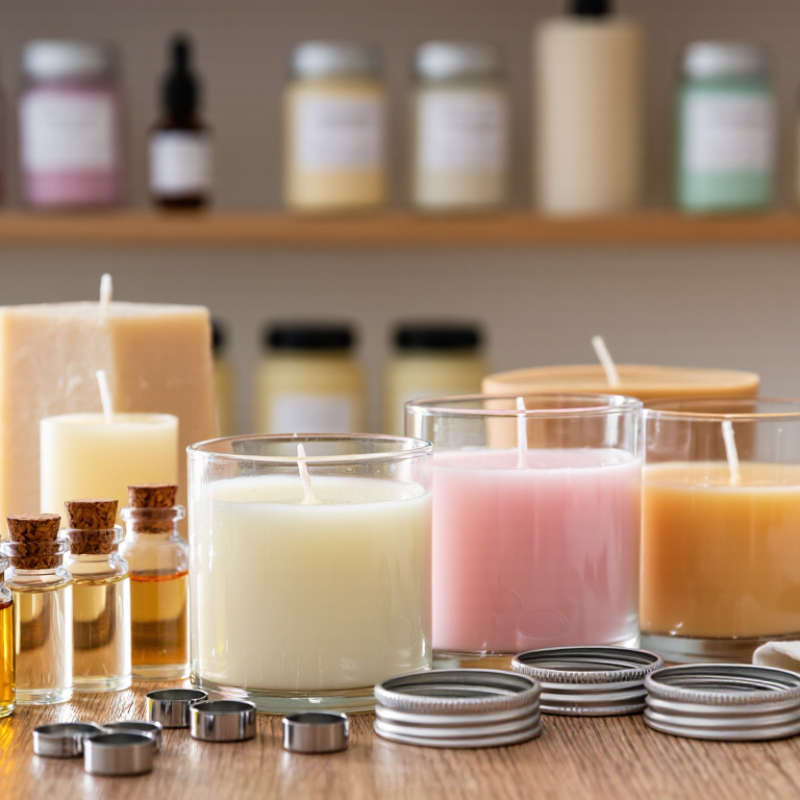
Custom fragrance candle manufacturing is the process of turning a specific scent brief into a repeatable, burn-tested product. A brief may describe a cedar-lined room, a citrus peel, or a softer version of a familiar floral note. Manufacturers translate those impressions into fragrance blends, then test how they behave in wax. The work includes selecting wax, wick, fragrance concentration, vessel, and pouring method. Each choice affects scent throw, flame stability, appearance, and burn time. Small changes matter. A wick that is slightly too large can create a tall flame and uneven melt pool.
The market context helps explain the demand for tailored products. Grand View Research valued the global candle market at USD 12.88 billion in 2023 and projected a 5.7% compound annual growth rate from 2024 to 2030. That figure covers candles broadly, not custom fragrance alone. Still, it signals a substantial category in which distinctive scent profiles can help products stand apart.
Reliable manufacturers document formulas, batch temperatures, curing periods, and test results. They also check fragrance performance after the candle cools, since a pleasant unlit scent may fade or change during burning. This is not perfectly predictable. Wax and fragrance can be stubborn. A sound development process therefore uses repeated sample burns and clear acceptance criteria, rather than relying on a fragrance description alone.
How Manufacturers Develop Bespoke Candle Fragrances
Custom fragrance development begins with a clear brief, not a bottle of perfume.
Manufacturers ask about the room, season, wax type, and desired burn experience. A scent for a small bedroom may need a softer throw than one for a high-ceilinged shop. The National Candle Association reports that fragrance is important to three-quarters of candle buyers. That makes scent selection more than a finishing touch. It is central to product design. Small details matter.
A perfumer typically builds trial blends from fragrance materials, then tests them in the intended wax. A paper blotter can suggest a promising direction, but it cannot predict how the scent will behave in a burning candle. Wick size, vessel shape, and fragrance load can all change the result. Manufacturers assess cold scent and hot scent, often across repeated burn tests. They also review supplier documentation and applicable IFRA guidance for the intended use. The first sample may smell too sharp. That is useful feedback, not failure. Teams adjust the blend, retest it, and record each version so the final formula can be reproduced consistently.
Key Criteria for Comparing Global Candle Manufacturers
Top 10 Custom Fragrance Candle Manufacturers Worldwide: Key Criteria for Comparing Global Candle Manufacturers
The scented candle market was valued at approximately USD 3.54 billion in 2022, according to Grand View Research. Its projected growth makes supplier selection more demanding. Manufacturers should be compared by fragrance capability, testing discipline, and production consistency. A pleasant first sample proves very little.
Ask for documented burn-test results, including burn time, melt-pool width, soot observations, and wick performance. ASTM candle-safety standards offer useful testing references for international buyers. Fragrance compliance also matters. Suppliers should provide current safety documents and confirm alignment with applicable IFRA Standards. I would not accept vague claims such as “non-toxic” without evidence. That wording can hide important limitations.
Production controls deserve equal attention. Check minimum order quantities, batch traceability, defect records, factory audits, and sample-to-bulk consistency. The 2023 Global Candle Market analysis from Fortune Business Insights identifies personalization and premium presentation as important market drivers. Therefore, evaluate vessel finishing, label accuracy, color stability, and protective packaging. A lower quotation may become expensive after breakage, delays, or reformulation. Request a pilot batch before a large order. Even experienced buyers can overlook seasonal fragrance variation. Manufacturers with strong technical records may still need clearer communication across time zones. Reliability is built through verifiable documents, repeatable tests, and honest answers when a specification cannot be met.
Top 10 Custom Fragrance Candle Manufacturers Worldwide
Key Criteria for Comparing Global Candle Manufacturers
This chart presents a practical procurement weighting model for comparing custom fragrance candle manufacturers. Product quality, fragrance development, regulatory compliance, production capability, and supply-chain performance are commonly reviewed before commercial selection. The percentages represent evaluation priorities rather than company-specific performance or market-share data.
Top 10 Custom Fragrance Candle Manufacturers Worldwide
Choosing among the world’s leading custom fragrance candle manufacturers takes more than comparing scent catalogs.
Buyers should examine fragrance development, wax consistency, burn testing, production capacity, and packaging options.
Ask for samples from the same production batch; a scent that smells balanced in a small test pour may change in a larger vessel.
Small details matter.
Grand View Research estimated the global candle market at about US$12.88 billion in 2023 and projected continued growth through 2030.
The figure covers candles broadly, not custom fragrance products alone, so it should not be treated as a direct measure of private-label demand.
Still, it signals a sizable market where manufacturers may differ sharply in minimum order quantities, lead times, and quality controls.
The National Candle Association reports that seven in ten U.S. households use candles, a useful consumer indicator, though it is not a worldwide survey.
For a practical “top 10” comparison, prioritize suppliers that document fragrance testing, disclose material specifications, and provide clear sample-to-production procedures.
Request written details on fragrance load, wick selection, vessel compatibility, and batch inspection.
Ask how they handle scent revisions, too.
Some suppliers make this process sound effortless; in reality, one small change can affect burn performance.
That deserves scrutiny.
Services, Production Capabilities, and Market Reach of Leading Manufacturers
Custom fragrance candle manufacturers compete through more than scent selection. Leading suppliers may offer fragrance development, wax and wick matching, vessel sourcing, private-label packaging, and production runs from pilot batches to larger orders. Grand View Research estimated the global candle market at USD 12.88 billion in 2022, with a projected 5.7% compound annual growth rate through 2030. That growth supports wider demand, but it does not guarantee every factory can deliver consistent quality.
Production capability is best judged through process details. Ask how each batch is checked for burn time, flame stability, scent throw, and surface finish. A capable partner can explain its testing methods and provide samples from production, not only polished prototypes. Market reach also depends on export experience, packaging options, and reliable shipping coordination. Still, a polished sample can mislead; production-scale results may vary.
Tips: Request a written sample brief, including wax type, fragrance strength, vessel dimensions, and target burn time. Compare two or three batches, and note any tunneling or uneven scent. Check minimum order quantities and lead times before approving packaging. Small details matter. A supplier’s weakness may be slow communication, even when its candles perform well.
Conclusion
Custom fragrance candle manufacturing brings together scent development, wax selection, vessel design, and production planning to create candles tailored to a particular market or brief. The process often begins with defining the desired mood, fragrance profile, burn performance, and visual style. Manufacturers then refine scent samples, test how fragrances behave in different waxes, and assess factors such as consistency, packaging options, minimum order quantities, quality controls, and production capacity.
This overview explores how to compare global manufacturers and what distinguishes their services, capabilities, and market reach. The featured Top 10 represent a range of approaches to Custom Fragrance Candle Production, from collaborative fragrance development to scalable manufacturing and customized presentation. Considering these factors can help businesses identify a production partner that fits their product goals, timeline, and customer expectations.