Sourcing Spa Wellness Brand Candles wholesale requires more than comparing prices. It requires sensory judgment, operational discipline, and reliable supplier verification. A candle may look luxurious online, yet arrive with uneven frosting, weak scent throw, or a wick that tunnels badly. These details affect customer trust.
Fragrance authority Michael Edwards describes perfume as “liquid emotion.” That idea matters for spa products. A eucalyptus candle should feel clean and breathable, not sharp or medicinal. Lavender should suggest calm, while cedar can create a warm treatment-room atmosphere. Buyers should request physical samples, burn them for several hours, and record scent strength, flame behavior, wax appearance, and burning time. Small tests reveal expensive problems.
Look for suppliers offering clear wax specifications, wick details, fragrance documentation, batch controls, and market-specific safety labels. Ask about minimum order quantities, private-label options, production capacity, packaging protection, and replacement policies. A dependable manufacturer should explain its process without vague promises. Consistent results matter more than a dramatic first sample.
Still, sourcing is not perfectly predictable. Natural waxes can vary slightly between batches. Fragrance perception can also change across rooms and seasons. That uncertainty deserves honest planning. Build a sample stage into the purchasing schedule, and keep a backup supplier under review. Compare landed costs, not only unit prices. Freight, cartons, testing, storage, and damaged goods can change the final margin quickly.
The strongest wholesale partnership combines beautiful scent, safe performance, dependable delivery, and transparent communication. Spa Wellness Brand Candles should support a complete wellness experience, from the first unboxing moment to the last clean burn.
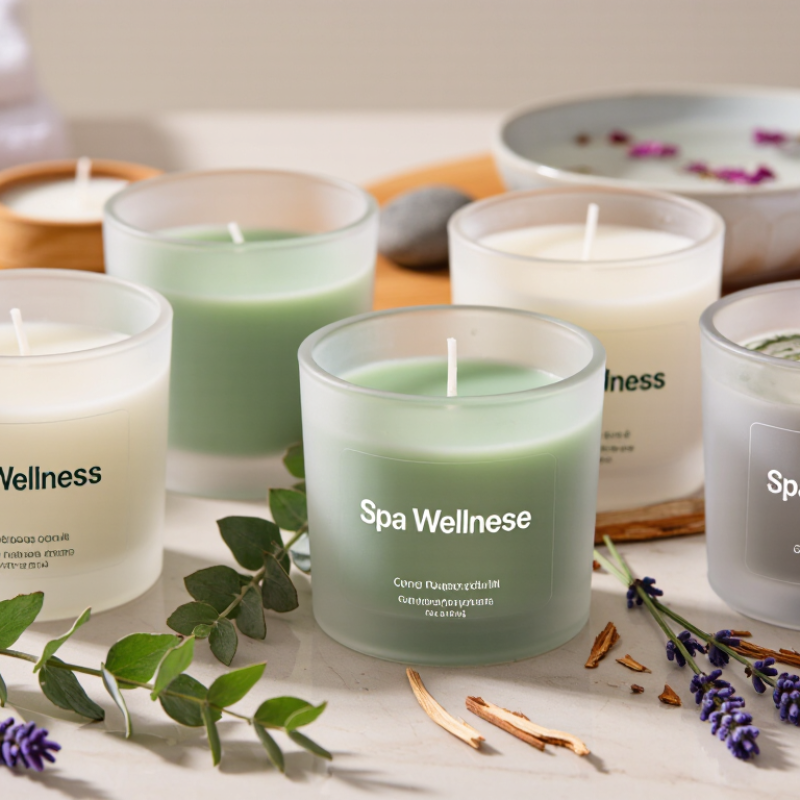
ISPA reported that U.S. spa revenue reached $21.3 billion in 2023. This figure signals strong commercial activity across wellness services. It also creates a practical opportunity for wholesale candle suppliers. Spa guests often expect calm lighting, subtle fragrance, and a polished treatment-room atmosphere.
Sourcing should begin with demand validation, not a large purchase order. Speak with spa owners, purchasing managers, and therapists. Ask which scents sell repeatedly and which formats create complaints. Lavender, eucalyptus, and unscented options may attract different customer groups. Test small batches in real settings. Observe burn quality, fragrance strength, soot, packaging, and customer reactions. A candle that smells pleasant online may feel overpowering in a quiet room.
Wholesale evaluation requires more than comparing unit prices. Request ingredient details, safety documentation, sample units, production timelines, and minimum order quantities. Review wick performance during several controlled burns. Check whether labels include clear usage instructions and required warnings for the target market. Reliable suppliers should answer specific questions without vague promises. I have found that attractive packaging can hide weak performance, especially when vessels become too hot. That mistake is expensive. Demand may also be seasonal, so monthly sales estimates can be misleading. Leave room for smaller trial orders, revised scents, and feedback from staff before committing to steady inventory.
| Market Dimension | 2023 Data | What It Indicates | Wholesale Candle Sourcing Implication |
|---|---|---|---|
| U.S. spa industry revenue | $21.3 billion | A large national wellness-services market with significant purchasing activity. | Supports testing candles as an ancillary retail, treatment-room, and client-gifting product. |
| Spa locations | 21,510 locations | The market offers a broad base of potential professional buyers. | Prioritize suppliers offering low minimum order quantities, sample kits, and repeat-order flexibility. |
| Annual spa visits | 192 million visits | High customer traffic creates repeated opportunities for sensory merchandising and retail conversion. | Evaluate fragrances, burn performance, packaging, and display formats suitable for frequent customer exposure. |
| Industry employment | Approximately 389,000 employees | A substantial service workforce can influence product recommendations and in-spa experience. | Provide clear scent descriptions, safety documentation, staff testers, and simple product education. |
| Calculated revenue per spa location | Approximately $990,237 | Average industry revenue divided by the reported number of locations; not a candle budget. | Use location-level pilots and sales data rather than assuming every spa has the same purchasing capacity. |
| Calculated visits per location | Approximately 8,926 visits | Average annual visits divided by reported locations; actual traffic varies by spa type and market. | Estimate trial quantities, tester usage, and reorder timing with conservative location-specific assumptions. |
Source: International SPA Association (ISPA), 2024 U.S. Spa Industry Study, reporting 2023 industry metrics. Calculated figures are derived from the reported totals and are rounded.
Define the wax, vessel diameter, wick, fragrance load, burn time, and testing requirements. Avoid vague mood-board descriptions. Written specifications reduce costly misunderstandings.
Request current fire-safety test reports, batch records, and production samples. Ask whether testing follows ASTM F2417 where applicable. One sample is not enough.
Request an IFRA Certificate of Conformity, allergen details, and a fragrance composition statement. The certificate should match the formula and intended candle use. “Approved” alone proves little.
Request pricing for 100, 300, and 500 units. A 500-unit minimum may suit a spa chain but burden a small retailer. Compare landed costs, packaging, freight, and storage.
Confirm fragrance approval, vessel production, filling, curing, inspection, and dispatch dates. A seven-day promise may exclude curing time. That detail matters.
Require samples using the final wax, wick, fragrance load, vessel, label, and carton. Burn them in a quiet room. Record soot, tunneling, scent strength, and total burn time.
Review batch records, raw-material traceability, worker safety, and corrective-action reports. An independent inspector can verify conditions when visiting is difficult. Paperwork can look perfect.
Re-test after changing the wax, wick, vessel size, or fragrance concentration. Fragrance strength may shift between batches. We learned this the hard way.
Sourcing Spa Wellness Brand Candles wholesale requires a structured process that connects market demand with product safety, quality, and cost control. The U.S. spa industry generated approximately $21.3 billion in revenue in 2023, while candles are used in about 70% of American homes, indicating strong potential for wellness-focused candle collections. Buyers should define specifications in advance, including wax type, vessel material, burn time, fragrance profile, packaging, and sustainability requirements. Product development should also consider ASTM F2417 guidance and IFRA fragrance standards to support safe and consistent production.
When evaluating wholesale suppliers, compare minimum order quantities, production lead times, customization options, factory audits, and sample quality. Before placing an order, verify labeling and product documentation, review applicable CPSC requirements, and request current safety data sheets (SDS). A complete cost analysis should include unit pricing, packaging, freight, insurance, customs duties, and potential storage expenses. This approach helps businesses select reliable suppliers and build a compliant, high-quality candle assortment for spa and wellness customers.