0%

China Top Private Label Candle Manufacturing Supplier?

The private-label candle market is growing beyond seasonal gifting. Fortune Business Insights valued the global candle market at approximately USD 13 billion in 2023. Its report projects continued growth through 2030, supported by home fragrance, wellness, and premium décor demand. Grand View Research also identifies scented candles as a major market segment. The figures differ slightly. Market reports are not perfect mirrors.

Consumer behavior adds useful context. Kathy LaVanier, a former president of the National Candle Association, has said, “Candles are used in 7 out of 10 U.S. households.” That reach creates opportunity for retailers, hotels, subscription brands, and interior designers. However, a beautiful label cannot repair poor wax, unstable fragrance, or an unsafe wick.

Reliable Private Label Candle Manufacturing requires visible evidence. A capable Chinese supplier should explain wax origins, fragrance documentation, wick selection, mold tolerances, and burn-test procedures. Ask for samples from the same production line. Inspect the melt pool. Watch the flame after two hours. Small details matter.

Strong manufacturers also maintain batch records and quality checkpoints. They should support packaging customization without hiding production limitations. Certifications can help, but they never replace independent testing. This is where many buyers become too optimistic. A factory tour alone proves little.

The best China supplier is not simply the cheapest option. It is the partner that communicates clearly, tests consistently, and admits what needs improvement. That balance supports safer products, dependable launches, and a private label customers may purchase again.
China Top Private Label Candle Manufacturing Supplier?

What Defines a Top Private Label Candle Manufacturer in China

China Top Private Label Candle Manufacturing Supplier?

What Defines a Top Private Label Candle Manufacturer in China

A top private label candle manufacturer combines stable production with practical product knowledge. Experienced teams understand how wax, wick size, fragrance load, and vessel shape affect burning performance. They test samples under controlled conditions, not only by visual inspection. A reliable supplier should provide batch records, material specifications, safety data, and clear production timelines. Small details matter. A loose wick can damage the customer experience.

Manufacturing quality also depends on communication. Strong suppliers confirm artwork, label dimensions, carton strength, and scent requirements before production begins. They should explain realistic minimum order quantities and sampling costs without hiding extra fees. Independent testing may be needed for burn time, container temperature, and fragrance performance. Compliance requirements vary by market, so responsible factories review applicable labeling and product safety rules. They should never promise universal approval.

Transparency reveals professional maturity. A factory may show production areas, testing procedures, and quality checkpoints through verifiable records. However, no supplier achieves perfection in every batch. That is worth admitting. Even a successful sample can require adjustment after larger-scale production. Good manufacturers investigate differences, retain samples, and correct root causes instead of blaming materials or customers. Buyers should ask difficult questions, request pre-production approval, and compare actual results with written specifications. Trust is built through evidence, not attractive photos.

How China’s Private Label Candle Production Process Works

China Top Private Label Candle Manufacturing Supplier?

How China’s Private Label Candle Production Process Works

Private label candle production in China begins with a practical product brief. Buyers specify wax type, vessel size, fragrance direction, burn time, label artwork, and target cost. The global candle market reached approximately USD 12.88 billion in 2022, according to Grand View Research. Its forecast growth increases pressure for consistent, scalable production. A capable supplier converts the brief into a technical specification sheet.

The factory then develops the formula and prepares a small sample. It tests wax adhesion, fragrance performance, wick size, surface finish, and burning behavior. A first sample is rarely perfect. The melt pool may develop unevenly, or the fragrance may feel too weak after cooling. That is normal, but every adjustment should be recorded. Suppliers usually test several wick options before approving mass production. They also inspect containers for cracks, sharp edges, contamination, and dimensional differences.

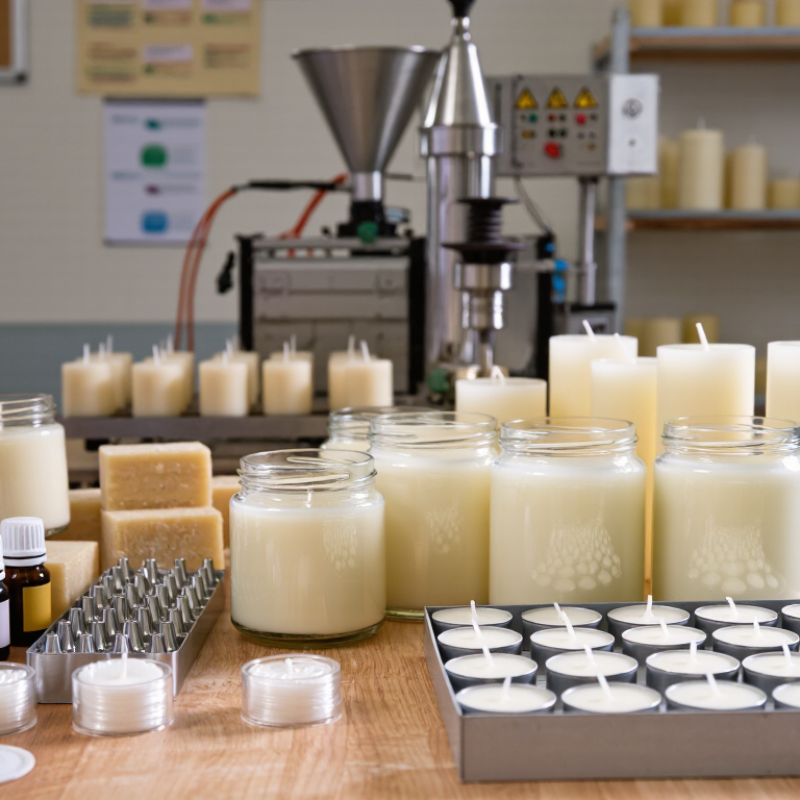
After approval, materials enter controlled production. Workers weigh wax and fragrance separately, heat the blend, secure the wick, and fill each vessel at a measured temperature. Cooling speed matters. It affects frosting, sinkholes, and surface smoothness. Quality teams check weight, appearance, wick position, packaging, and batch records. Industry safety guidance, including recommendations from the National Candle Association, supports careful wick sizing and burn testing. Export documents and destination-market requirements must be reviewed before shipment. A cheaper process can look attractive, yet weak sampling records often create expensive rework later.

Key Factors for Evaluating Chinese Candle Manufacturing Suppliers

Choosing a top private label candle supplier in China requires more than comparing prices. Supplier evaluation should begin with factory capability, material control, and clear communication.

Ask where the wax, wick, fragrance, and vessels come from. Reliable suppliers should provide material specifications and consistent batch records. Request samples from different production runs, not only a perfect showroom sample. Small details matter. Check burn time, flame height, scent strength, soot, surface finish, and jar temperature. A candle that looks attractive may still perform poorly.

Visit the production site when possible, or arrange a documented video audit. Observe wax melting, wick placement, filling, curing, labeling, and final inspection. Ask how workers handle defects and damaged packaging. Strong suppliers explain their quality process without avoiding difficult questions. They should also discuss minimum order quantities, lead times, packaging tests, and compliance documents for your target market.

Communication is another practical test. Send a detailed specification sheet and compare the supplier’s response. Do they confirm measurements, materials, tolerances, and testing needs? Vague answers can create expensive surprises. I would also review sample revisions carefully, because one corrected wick does not prove stable production. A supplier may be experienced yet imperfect. That is normal, but repeated mistakes deserve attention. Reliable cooperation depends on traceability, honest reporting, and written approval before mass manufacturing begins.

Private Label Candle Customization and Product Development Options

Private Label Candle Customization and Product Development Options

Private label candle development begins with a clear product brief, not a beautiful label. Define the wax type, vessel size, fragrance direction, wick material, burn time, and target market. An experienced manufacturing supplier can turn these details into a workable sample plan. Small choices matter. A cotton wick may suit one wax blend, while a wooden wick may create a stronger visual effect. Both require testing.

Customization can include colored wax, embossed vessels, printed boxes, warning labels, gift sets, and seasonal fragrance collections. Product developers should review fragrance performance in the actual container. A scent that smells balanced on a paper strip may become weak during burning. Sample approval should include appearance checks, cold throw, hot throw, tunneling, soot, and burn consistency. Do not rely on one successful test.

Reliable production also depends on documented specifications. Keep approved samples, fragrance percentages, vessel measurements, packaging files, and inspection standards together. Batch records help identify changes in wax texture or fragrance strength. Quality control should examine wick placement, surface finish, label alignment, and carton protection. These details are easy to overlook.

Development rarely goes perfectly. A darker color may hide frosting but change the product’s character. A stronger fragrance may affect burn performance. This requires honest adjustment. Working with a supplier that provides clear sampling, testing, and production communication can reduce avoidable surprises while preserving the intended product experience.

Quality Control, Compliance, and Export Considerations in China

China Top Private Label Candle Manufacturing Supplier?

Quality control begins with the wax, wick, fragrance, vessel, and label. A reliable factory records each batch and keeps retained samples. This matters because Grand View Research valued the global candle market at about USD 12.9 billion in 2023. Rapid growth increases pressure on consistency.

Ask for test reports, not promises. Check burn time, flame height, soot, container heat, and wick stability. ASTM F2417 covers fire safety for candles, while EN 15493 addresses candle safety in European markets. Fragrance documentation should also support IFRA compliance. For European shipments, REACH and CLP duties may apply. For the United States, labeling and consumer safety obligations require careful review. Requirements vary by product and destination. Mistakes still happen.

Tips: Request a pre-production sample, a production sample, and a carton-drop test. Confirm the HS code, invoice details, packing list, country-of-origin marking, and export documents. Ask who owns testing costs when a batch fails. Inspect cartons before loading; damp storage can damage paper labels and wooden wicks. SGS’s Consumer Insights research shows that product quality strongly influences purchasing confidence, but quality is difficult to prove through photographs alone. Factory audits help, yet they are not perfect. I would still combine an audit with independent laboratory testing and random inspections before shipment.

FAQS

What defines a top private label candle manufacturer in China?

A strong manufacturer controls wax, wick size, fragrance load, vessels, and production timing. They test burning performance, not only appearance. Reliable records matter.

How should buyers evaluate candle quality?

Request samples from different production runs. Check burn time, flame height, scent strength, soot, surface finish, and jar temperature. A beautiful candle can still burn poorly.

What documents should a manufacturer provide?

Ask for material specifications, batch records, safety data, and production timelines. Compliance documents may also be needed for your target market. Universal approval is not guaranteed.

Why are wick placement and size important?

Wick size affects flame height, melting, soot, and burn consistency. A loose wick can damage the customer experience. Small details matter.

How can buyers inspect factory production?

Visit the site when possible, or arrange a documented video audit. Observe melting, wick placement, filling, curing, labeling, and final inspection. Look closely.

What should be confirmed before mass production?

Confirm artwork, label dimensions, carton strength, scent requirements, measurements, and tolerances. Approve a pre-production sample in writing. One corrected wick proves little.

How can buyers identify hidden production risks?

Ask about minimum order quantities, sampling costs, lead times, packaging tests, and extra fees. Vague replies can create expensive surprises. That assumption can fail.

What happens if large-scale production differs from the sample?

A responsible manufacturer investigates the difference, keeps retained samples, and identifies root causes. Adjustments may still be necessary. Perfection is not promised.

Why is communication important when choosing a supplier?

Clear communication prevents errors in labels, materials, measurements, and testing. Compare the supplier’s response with your specification sheet. Trust needs evidence.

What is the most practical way to build supplier trust?

Compare written specifications with actual results across several batches. Request difficult answers and review sample revisions carefully. Attractive photos are not proof.

Conclusion

Choosing the right partner for Private Label Candle Manufacturing in China requires more than comparing prices. A top manufacturer should offer reliable production capacity, experienced technical teams, transparent communication, and the ability to consistently deliver products that match your specifications. Understanding the complete production process—from wax selection, fragrance blending, wick placement, and container preparation to pouring, curing, labeling, and packaging—helps buyers set realistic expectations and identify potential quality risks.

Effective supplier evaluation should include material sourcing, production controls, sampling procedures, testing capabilities, minimum order requirements, lead times, and export experience. Chinese candle manufacturers may also provide extensive customization options, including wax types, scents, colors, vessel designs, packaging, labels, gift sets, and product development support. Strong quality control, accurate documentation, appropriate safety testing, and compliance with destination-market requirements are essential for smooth international shipments. By assessing these factors carefully, businesses can build a dependable supply relationship and develop attractive, consistent candle collections for their target customers.


Julian

Julian

Julian is a dedicated marketing professional with extensive knowledge of the company’s products, services, and industry landscape. Through a combination of strategic thinking, market research, and clear communication, he helps customers better understand how the company’s solutions can support......