China has become a significant sourcing base for private-label and Contract Candle Manufacturing. Its advantages include established wax-processing clusters, broad packaging supply, and export-oriented factories. However, production scale alone does not prove quality.
Grand View Research estimated the global candle market at approximately USD 8.9 billion in 2023. The same report projects continued growth through 2030, supported by home fragrance, gifting, and wellness products. Fortune Business Insights also identifies scented candles and premium packaging as important market segments. These figures explain why retailers increasingly seek experienced Chinese manufacturing partners.
Yet, factory selection requires more than a polished website. A reliable supplier should provide batch records, fragrance documentation, wick testing, burn-test results, and clear material specifications. Intertek and SGS guidance on consumer-product testing highlights the importance of safety checks, labeling accuracy, and traceable quality control. Small details matter. A poorly centered wick can create uneven burning, while an unsuitable fragrance load may affect performance.
This China Top 10 Contract Candle Manufacturing Companies overview focuses on practical capabilities, including formulation support, vessel sourcing, minimum order quantities, production capacity, customization, and export experience. It also considers certifications and communication practices, rather than relying only on promotional claims. Some rankings may remain subjective because factories disclose different levels of commercial data. That limitation deserves attention. Buyers should verify current certificates, request samples, inspect production controls, and confirm compliance with destination-market requirements before signing an agreement.
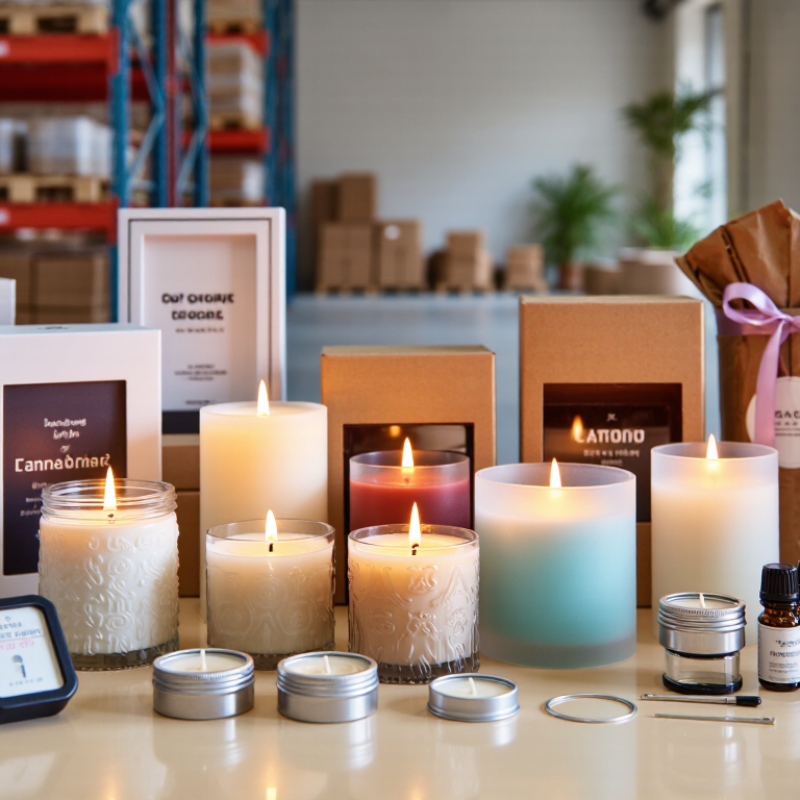
Contract candle manufacturing in China refers to a service where a factory produces candles for another company under an agreed specification. The buyer may provide a formula, design, packaging plan, or only a basic product idea. The manufacturer then manages selected stages, including wax preparation, wick assembly, fragrance dosing, vessel filling, cooling, labeling, and packing. Some factories also support product development and sourcing.
The scope can cover small seasonal collections or large retail orders. It may include container candles, pillar candles, tealights, gift sets, and customized shapes. A professional supplier should document wax composition, wick size, fragrance concentration, burn-test results, and batch numbers. Quality checks should inspect surface finish, scent consistency, glass condition, label accuracy, and carton strength. Details matter.
China’s manufacturing network offers access to equipment, packaging materials, and skilled production teams. However, low pricing alone does not prove reliable performance. A factory sample can look perfect while a larger batch behaves differently. I would request a pilot run, written specifications, production photographs, and independent testing when appropriate. Safety labeling and shipping documents must match the destination market. Communication can still fail when technical terms remain vague. Clear approval records reduce that risk, although they cannot remove every production error.
Choosing China’s top contract candle manufacturers requires more than comparing factory prices. A reliable supplier should provide clear production records, verified facility information, and consistent quality-control procedures. Review wax sourcing, wick specifications, fragrance documentation, vessel safety, and batch traceability. Ask for recent test reports, sample approval records, and evidence of burn testing under controlled conditions. Experience matters, but old factories can still have weak systems.
Production capability must match your product plans. Check minimum order quantities, mold development, filling accuracy, packaging options, and monthly capacity. A professional manufacturer should explain lead times honestly and identify possible delays before sampling begins.
Communication also matters. Technical questions deserve specific answers, not vague promises. Factory audits, video inspections, and independent pre-shipment checks can reveal details that polished samples hide. Samples are not enough.
Tips: Request three production samples from separate batches. Compare scent strength, surface finish, wick position, burn behavior, and packaging durability. Confirm how rejected units are handled. Keep written specifications for every approved detail. In practice, even careful buyers miss small issues, such as label heat resistance or carton compression. That is worth reflecting on. A dependable partner accepts corrections, documents changes, and maintains the same standards after the first order. Evaluate responsiveness during a problem, not only during sales discussions.
China’s contract candle sector includes factories with different strengths, scales, and production habits. Small details matter.
Profile 1 focuses on soy wax candles for lifestyle collections, using temperature-controlled pouring and batch records.
Profile 2 serves hotel and spa projects, offering clean packaging, fragrance testing, and flexible order quantities.
Profile 3 specializes in glass jar candles, with strong control over wick centering and surface finish.
Profile 4 produces molded candles for seasonal displays and gift programs. Its team manages color consistency, although difficult shades may require extra sampling.
Profile 5 combines candle filling with private packaging services, helping buyers reduce coordination time.
Profile 6 supports large retail orders through semi-automated lines and documented inspections. Its speed is useful, but rapid production still needs careful random testing.
Profile 7 works with beeswax and plant-based blends, providing material traceability and burn-test reports.
Profile 8 is suited to premium scented collections, with internal fragrance evaluation and controlled curing rooms.
Profile 9 handles promotional candles and event orders, where artwork accuracy and delivery planning are important.
Profile 10 offers custom shapes, labels, and fragrance options for smaller brands. Its flexibility is valuable, yet limited capacity can affect peak-season schedules.
Buyers should review factory audits, sample results, safety documents, export experience, and complaint procedures before signing. A polished sample is not enough. Real reliability appears across repeated batches.
China’s top ten contract candle manufacturers compete on more than factory scale. They combine wax processing, fragrance development, vessel sourcing, filling, and export testing. Grand View Research valued the global candle market at USD 12.88 billion in 2023. It projects a 5.8% CAGR from 2024 to 2030. That growth raises buyer expectations for repeatable quality. A capable supplier should show batch records, burn-test images, and traceable raw-material documentation. Factory tours help, but remote evidence is never perfect.
Production capability starts with controlled melting temperatures and accurate fragrance dosing. Ask whether the factory supports soy, paraffin, beeswax, or blended formulations. Container options may include glass, ceramic, metal, and molded vessels. Customization can cover color, wick size, scent profile, label artwork, packaging, and gift sets. Certifications deserve careful wording. ISO 9001 supports quality management, while ISO 14001 addresses environmental systems. BSCI and SMETA are social-compliance audits, not product certifications. Request testing against ASTM F2417, ASTM F2058, EN 15493, and EN 15494. IFRA documents support fragrance safety review, but they cannot replace finished-product testing.
Tips: Request a pilot batch before signing a large contract. Check wick trimming, soot, tunneling, burn time, and vessel temperature. Require approved samples and written change-control procedures. Do not select on price alone. Attractive samples can fail during longer burns. Low MOQs may also hide extra mold, testing, or packaging charges.
Choosing a Chinese contract candle manufacturer requires more than comparing a “top 10” list. A ranking may not show factory capacity, quality controls, or communication habits. Ask for a clear production flow, from wax heating to wick placement and final packing. Request recent audit records, product test reports, and evidence of consistent batch control. Factory experience matters.
Always inspect a physical sample before signing a large order. Check the candle’s surface, scent strength, burn time, flame stability, and container temperature. Ask how the manufacturer tests different waxes, fragrances, wicks, and vessel sizes. A small wick change can affect the entire burn. It is easy to overlook this detail.
I once considered a polished sample a strong quality signal. That was too simple. Samples can hide production weaknesses. Request several units from the same batch, not only one perfect piece. Confirm minimum order quantities, mold fees, lead times, packaging options, and replacement policies in writing. Communication should be practical and traceable. Slow answers can become costly delays.
Visit the facility when possible, or arrange a live video inspection. Observe material storage, weighing procedures, ventilation, worker protection, and finished-goods inspection. Reliable manufacturers should discuss safety testing and applicable destination-market requirements without making vague promises. Leave room for improvement. Your first specification may be incomplete, especially around fragrance intensity, label placement, or carton strength. A trial order can reveal problems before they reach your customers.
Recommended evaluation weights for comparing contract candle manufacturers without relying only on price.
A reliable contract candle manufacturer should be assessed across several practical dimensions. Product quality and cost competitiveness usually have the greatest influence on long-term results, while compliance, customization, minimum order quantity, production lead time, and export capability help determine whether a supplier is suitable for a specific market and product strategy. These percentages represent a structured purchasing scorecard rather than data from any individual company.
Request batch records, raw-material documents, burn-test results, and sample approval records. Traceability matters.
Ask about soy, paraffin, beeswax, and blended wax formulas.
Request three samples from separate batches. Compare scent, surface finish, wick position, and burn behavior.
Services may include color matching, wick selection, scent development, labels, packaging, and gift sets.
Quality and environmental certifications can support factory evaluation. Social audits show workplace practices, not product safety.
Ask about filling accuracy, monthly capacity, mold development, packaging options, and minimum order quantities.
Audits can reveal equipment, storage conditions, labeling issues, and quality-control practices.
Technical questions should receive specific answers, evidence, and documented corrective actions.
This article presents a practical overview of Contract Candle Manufacturing in China, explaining how businesses can work with specialized factories to develop, produce, and package candles according to their market needs. It defines the scope of contract manufacturing, from product design and wax selection to fragrance development, container options, labeling, quality control, and order fulfillment. The selection of China’s top 10 contract candle manufacturers is based on factors such as production capacity, manufacturing experience, quality management, export readiness, certifications, safety standards, customization capabilities, minimum order quantities, pricing, and communication efficiency.
The article also compares the production strengths and service features commonly offered by leading manufacturers, including private-label support, custom fragrances, packaging design, sample development, and flexible production programs. Finally, it provides guidance on choosing the right manufacturing partner by evaluating product requirements, target customers, budget, timelines, compliance documentation, quality inspection procedures, and long-term cooperation potential. This framework helps buyers make informed decisions and build reliable candle supply chains.