Unscented Household Candles are entering 2026 with practical appeal and broader global relevance. Buyers increasingly want clean-burning products without added fragrance, especially for dining rooms, bedrooms, hospitality spaces, and emergency storage. Grand View Research valued the global candle market at approximately USD 7.15 billion in 2023. Its report forecasts continued growth through 2030, supported by home décor, wellness, and seasonal purchasing. The numbers are encouraging, but they do not explain every household decision.
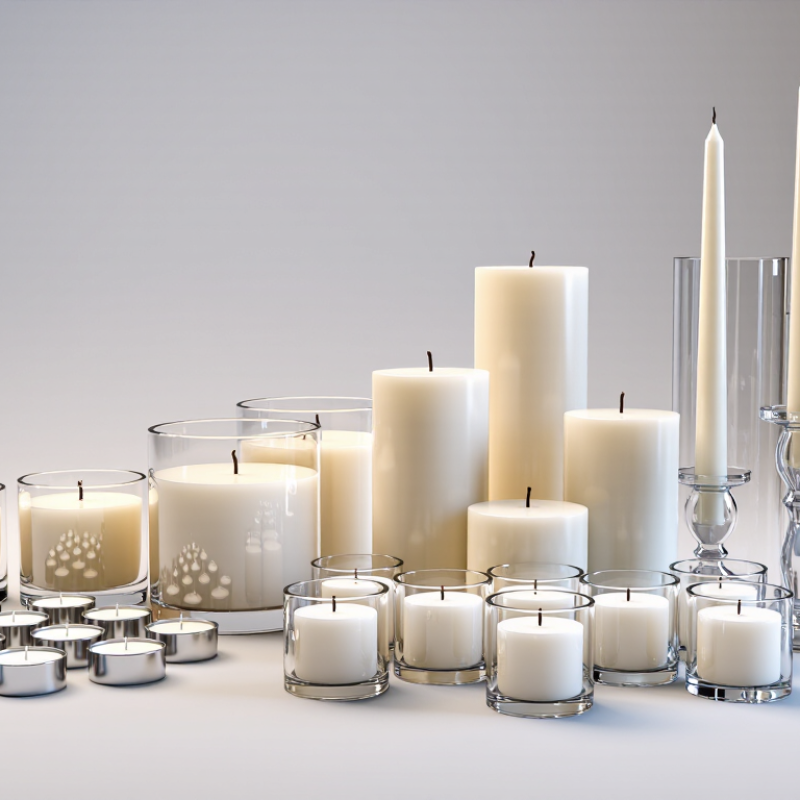
Shape still matters. Pillar candles offer long burn times and visual stability. Taper candles suit dining tables and ceremonial settings. Votive candles fit compact holders, while tealights support events, hotels, and backup lighting. Container candles provide easier handling and more controlled placement. For international buyers, wax type, wick construction, burn duration, packaging strength, and safety labeling deserve equal attention. Small details matter.
Kathy LaVanier, a former president of the National Candle Association, has said, “Candles are the number one home fragrance product in the United States.” Unscented products challenge that idea by serving homes that prefer no fragrance at all. The National Candle Association also reports that U.S. candle sales exceed USD 3 billion annually, showing the category’s commercial strength. However, market reports often combine scented and unscented products. That creates a research gap. This 2026 guide therefore compares the main Unscented Household Candles types through practical use, buyer expectations, and international sourcing considerations. Not every “natural” claim is equally reliable. Product testing remains essential.
2026 Top Types of Unscented Household Candles for Global Buyers
Global candle market forecasts indicate a 5%–6% CAGR between 2024 and 2030. This range reflects rising demand for practical home lighting and low-odor products. Unscented candles suit bedrooms, dining areas, meditation spaces, and homes with fragrance sensitivities. They also support flexible use across different cultural and household preferences. The category is not perfectly uniform. Forecasts can shift with wax costs, shipping rates, and regional safety rules.
Pillar candles remain popular because their wide bodies provide steady, decorative light. Taper candles fit dining tables, while votive candles work well in small holders and hospitality settings. Jar candles offer cleaner storage and easier handling. Tealights provide short-duration lighting for events or backup use. For global buyers, cotton or paper-based wicks should be checked for stable trimming and controlled burning. A wick that produces heavy soot is a warning sign.
Material selection needs practical testing. Paraffin wax often supports consistent shape and strong color, while soy, beeswax, and blended waxes may offer different burn behavior. Buyers should request burn-test records, batch details, dimensions, net weight, and packaging specifications. Container candles need heat-resistant vessels and clear instructions. Small details matter. A candle may look premium but tunnel badly after one hour. Suppliers should test burn time, flame height, surface temperature, and residue under ordinary room conditions. Certification requirements also vary by destination, so one global document may not satisfy every market.
For mass retail, paraffin unscented candles remain a practical choice for buyers seeking predictable costs and broad consumer appeal. Their neutral profile suits dining tables, emergency drawers, hospitality rooms, and everyday home use. Typical burn times range from 20 to 60 hours, depending on candle diameter, height, wick design, and wax formulation.
Size matters greatly. A narrow pillar may burn unevenly in a drafty room, while a wider candle can provide a steadier flame.
Buyers should request independent burn tests, not rely only on catalog claims. Testing should record flame height, melt-pool width, soot, dripping, and total hours.
Small details matter. A wick that mushrooms may create smoke or an unstable flame.
Unscented does not mean emission-free. Paraffin candles still need suitable ventilation and clear safety instructions. Retail packaging should show burn guidance, material information, batch details, and warnings in the destination market’s required language.
I have found that overly precise burn claims can mislead shoppers, because room temperature and airflow change results. A 40-hour label may perform differently beside a window than in a calm storage room. This is an area where buyers should remain cautious, even when samples appear consistent. Bulk orders also deserve pre-shipment checks, especially for surface cracks, weak cartons, and wick alignment.
Soy wax unscented candles are gaining attention among global buyers seeking cleaner-looking burns and neutral indoor air. Grand View Research valued the global candle market at approximately USD 12.9 billion in 2023, reflecting strong demand across home and hospitality spaces. Yet “lower soot” should not mean “soot-free.” Wick size, wax purity, airflow, and container design can change the flame dramatically.
ASTM F2417 testing focuses on candle fire-safety performance, including flame height, tip-over behavior, and container-related risks. It does not prove zero emissions or guarantee a sootless burn. Buyers should request test reports, batch identification, burn-time records, and material disclosures. Look closely at wick construction. A centered, properly trimmed wick usually produces a steadier flame.
Small details matter.
The National Fire Protection Association reported an annual average of about 5,910 home candle fires from 2016 to 2020. This figure makes transparent safety testing commercially important, not decorative paperwork. For procurement teams, soy wax can offer a lower-soot option when paired with suitable wick engineering and controlled manufacturing. However, some suppliers overstate this advantage. Independent testing remains essential.
During evaluation, burn samples in a draft-free room. Record smoke, mushrooming, flame movement, and residue after two hours. A pale wax surface may still hide poor combustion. Global buyers should also review packaging warnings and local compliance requirements before shipment.
Typical melting-point ranges of common candle waxes, including soy wax as a lower-soot option when properly wicked and burned.
Soy wax commonly melts at approximately 45–55°C, while paraffin, beeswax, coconut wax, and palm wax have different working ranges depending on formulation. Lower soot performance depends on wick selection, wick trimming, airflow, and burn conditions. ASTM F2417 is a fire-safety standard for candles; it is not a direct soot-emissions test.
For global buyers, unscented beeswax candles offer a practical, natural option for homes, hospitality, and gift collections. Their warm golden color comes from the wax itself, not added dye. A faint honey-like aroma may remain, even without fragrance. This point matters for buyers seeking a truly neutral indoor product.
Beeswax usually burns longer than many softer waxes, but performance depends on diameter, wick size, airflow, and wax purity. In testing, a stable cotton wick should create a steady flame without heavy smoke. Keep the candle away from windows and strong drafts. A neglected detail, but an important one. Natural wax does not automatically guarantee clean burning or consistent quality.
RAL-GZ 041 should be treated as a documented quality requirement, not a decorative claim. Buyers should request current certification details, test scope, production-site information, and batch traceability. They should also confirm that the documentation covers the exact beeswax candle model. The standard may address candle safety, raw materials, burning behavior, and manufacturing quality. Requirements can change, so verification with an accredited testing body remains sensible. Some suppliers provide attractive certificates but weak technical evidence. That is where careful review is necessary. Check wick construction, surface finish, burn time records, packaging warnings, and sample performance before placing a large order. A small pilot shipment can reveal uneven flames, wax cracking, or unexpected odor.
Unscented household candles are changing as global buyers seek lower-impact choices. Coconut wax burns smoothly and usually gives a clean, creamy appearance. However, its environmental value depends on farming methods, transport distance, and processing energy. A candle may look sustainable while carrying a heavy shipping footprint.
Palm wax can create firm candles with attractive crystal patterns. Responsible sourcing matters greatly. Buyers should request traceability documents and check whether suppliers support recognized sustainable palm standards.
LED candles offer another practical option. They produce no flame, smoke, or indoor soot. They work well in hotels, care facilities, restaurants, and homes with children. Their batteries and electronic parts still require proper disposal. No option is perfect.
Tips:
Ask for wax origin, packaging details, burn-test results, and safety documentation. Compare net weight, not only unit price. Check whether the wick is lead-free and properly centered. For LED products, test battery life under regular use. Requirements differ by market, so review applicable labeling and electrical rules before ordering. Small details matter. A supplier’s attractive sustainability statement should not replace verifiable evidence.
Forecasts suggest 5%–6% annual growth from 2024 to 2030. Buyers want practical lighting and low-odor products. Demand is not perfectly predictable.
Pillar candles provide broad, steady light. Tapers suit dining tables, while votives fit small holders. Jars offer cleaner storage, and tealights support short events.
Check for centered cotton or paper-based wicks. A properly trimmed wick usually burns more steadily. Heavy soot is a warning sign.
Paraffin often keeps consistent shapes and colors. Soy, beeswax, and blended waxes can burn differently. Testing matters more than attractive material claims.
No. Soy wax may create a lower-soot burn under suitable conditions. Wick size, airflow, wax purity, and container design still affect smoke.
Use a draft-free room. Record smoke, flame movement, mushrooming, residue, and burn time after two hours. Small tests can expose weak combustion.
Beeswax usually burns longer than many softer waxes. It often has a warm golden color and faint honey-like aroma. Truly neutral air is not guaranteed.
Request burn-test records, batch details, dimensions, net weight, packaging specifications, and material disclosures. Confirm safety documents cover the exact candle model.
Choose heat-resistant vessels with clear safety instructions. Review destination requirements before shipment. One global document may not satisfy every market.
A small shipment can reveal uneven flames, wax cracking, poor tunneling, or unexpected odor. It costs time, but large orders can fail quietly.
The global market for Unscented Household Candles is expected to grow at an estimated 5%–6% CAGR from 2024 to 2030, supported by demand from mass retail, hospitality, emergency preparedness, and fragrance-sensitive households. Paraffin unscented candles remain a practical option for buyers seeking affordable products with approximately 20–60 hours of burn time, depending on size, wick design, and formulation. Soy wax alternatives are valued for their plant-based positioning and potential for lower soot when properly formulated and tested, including reference to ASTM F2417 requirements where applicable.
Beeswax candles offer a natural wax option, a relatively long burn, and suitability for buyers seeking higher-end materials, with RAL-GZ 041 serving as a relevant quality and safety reference in certain markets. Coconut and palm waxes can support diversified sourcing and sustainability goals when responsibly produced and transparently documented. LED candles provide a flameless alternative for locations prioritizing convenience, reduced heat, and lower fire risk, making them suitable for global buyers with varied household and commercial needs.